
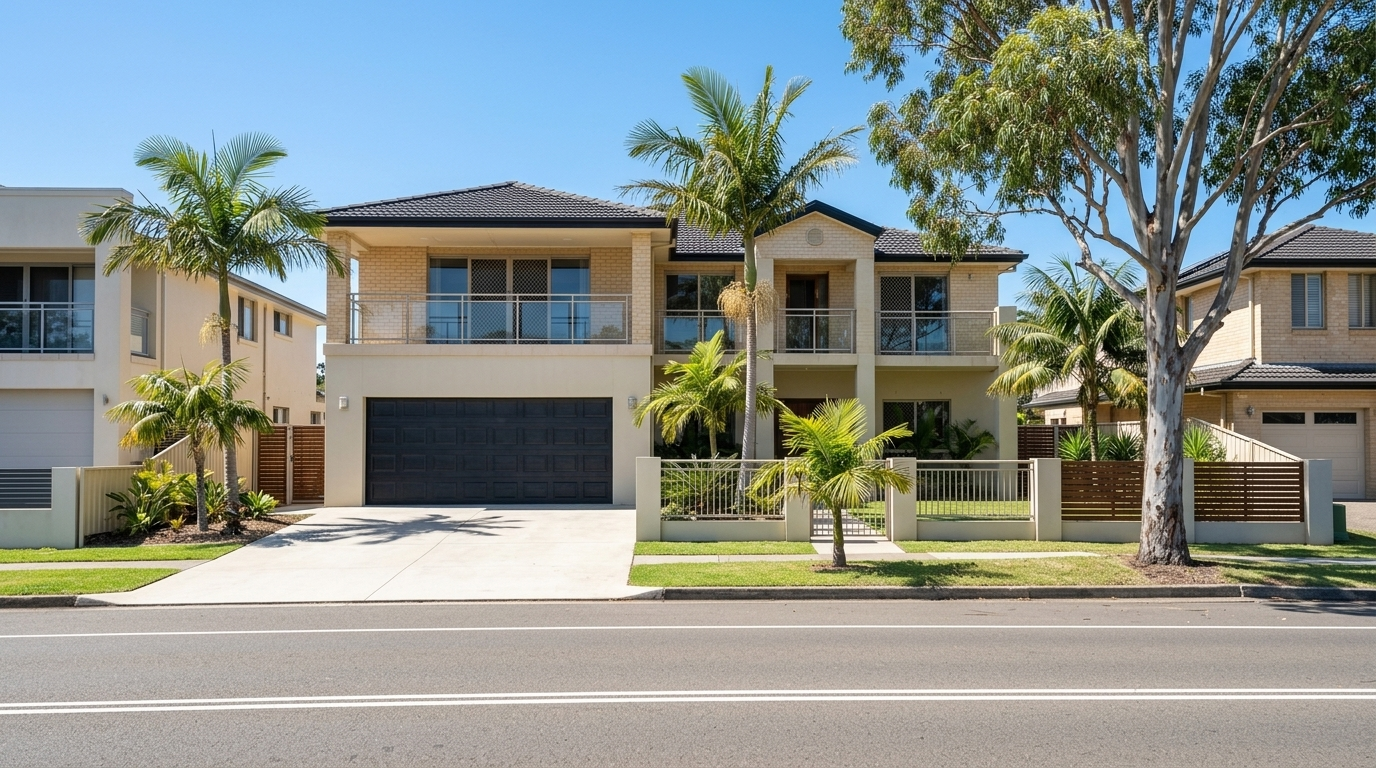
St Huberts Island is not the sort of place you stumble across. The single bridge off Helmsman Boulevard, the avenue of palms, the quiet canal-front streets: everything signals a deliberate destination. Homes range from around $1 million on dry blocks to the $6 million paid for 21 Long Arm Parade in October 2024.
At these price points, understanding the contract of sale and cooling-off rights matters. This guide walks through what the contract includes, how exchange and deposit work, the cooling-off period, when it does not apply, and what follows through to settlement.
What the Contract of Sale Includes
In NSW, a residential property cannot be marketed until a contract of sale has been prepared by a solicitor or licensed conveyancer. This is not a one-page summary. It is a comprehensive legal document, and it must be available before the first open home.
The contract includes a title search, the registered plan showing boundaries and easements, a drainage diagram, a Section 10.7 zoning certificate from Central Coast Council, and a statement of cooling-off rights. For St Huberts Island, zoning matters. The island is split across R2 Environmental Living, RE1 Low Density Residential, C1 National Parks and Nature Reserves, and W2 Recreational Waterways. Nearly every dwelling, 97%, is a detached house. Canal-front properties bring added considerations such as pontoon licences and waterway access, and the zoning certificate is where these surface.
A real estate agent cannot change the contract. Only your solicitor or conveyancer can negotiate amendments. Request a copy early and have it reviewed before you commit.
Exchanging Contracts and Paying the Deposit
Exchange is the moment the purchase becomes legally binding, subject to the cooling-off period. Both parties sign their respective copies of the contract, and those copies are exchanged, usually handled by your solicitor or conveyancer.
The deposit is payable at exchange. The standard figure is 10%, though negotiable. At the median sale price of $1.13 million, that is $113,000. On a $2.5 million canal-front home, $250,000.
Many buyers structure the deposit in stages: 0.25% at exchange, with the balance payable after cooling-off expires. This limits the funds at risk during the cooling-off window. For a $2 million purchase, 0.25% is $5,000, a modest outlay while your solicitor reviews the contract and you finalise finance. Your conveyancer can confirm whether a staged deposit suits your situation.
The Cooling-Off Period Explained
When you buy a residential property by private treaty in NSW, you have a 5 business day cooling-off period. It starts on the day contracts are exchanged and ends at 5pm on the fifth business day. Weekends and public holidays do not count.
An example makes it concrete. Exchange contracts at 10am on a Tuesday, and your cooling-off period ends at 5pm the following Tuesday. If a public holiday falls within that stretch, the window extends by a day.
For off-the-plan purchases, the cooling-off period is 10 business days. These contracts tend to be larger and more complex, so the longer window gives buyers adequate time. While St Huberts Island is fully built out and off-the-plan purchases are rare here, it is useful to know the rule if a new development were ever to occur.
During this period, you can rescind the contract for any reason. Your solicitor or conveyancer serves written notice to the vendor, typically by email with proof of delivery. No justification is required. If you withdraw, you forfeit 0.25% of the purchase price. The rest of your deposit is refunded.
For a $1 million home, that forfeiture is $2,500. For a $3 million canal-front property, $7,500. These are real costs, but modest relative to the total purchase, and they give you time to confirm finance, review the contract, and complete due diligence.
Cooling-off is distinct from the settlement period, which typically runs six weeks and handles the transfer of title and final payment. Cooling-off is those first five business days; settlement comes at the end.
When the Cooling-Off Period Does NOT Apply
Cooling-off is not universal. Properties sold at auction have no cooling-off period. When the hammer falls, the contract is immediately binding. The same rule applies if a property passes in and sells later that same day to a bidder.
Buyers can also voluntarily waive their cooling-off rights by providing a Section 66W certificate. This document must be signed by your solicitor or conveyancer, not by you personally. By giving it, you confirm the contract is unconditional at exchange and you cannot later change your mind.
Why would a buyer do this? In a competitive situation, where a desirable canal-front home on St Huberts Island attracts multiple interested parties, a 66W certificate can make an offer stand out. Sellers value certainty. A contract without a cooling-off period cannot fall through during that window.
The decision should never be casual. Finance should be unconditional. All due diligence should be complete. Every question about the contract and the property should be answered before your solicitor signs that certificate.
From Cooling-Off to Settlement: What Happens Next
Once the cooling-off period expires without rescission, the contract becomes unconditional and binding on both parties.
Settlement typically follows six weeks after exchange, though a different period can be negotiated. During this time, your solicitor or conveyancer prepares the electronic lodgment documents, verifies your identity, and arranges the transfer of title through an Electronic Lodgment Network. Paper cheques and physical documents are no longer part of NSW settlements.
On settlement day, finances are electronically disbursed, documents are lodged with NSW Land Registry Services, and you become the legal owner. A final inspection on the morning of settlement confirms the property is in the same condition as when contracts were exchanged.
For St Huberts Island buyers relocating from Sydney or interstate, a pattern common among the suburb’s sea-change demographic, the settlement window is also the practical period for coordinating a move. Given the island’s median age of 58 and its character as a predominantly owner-occupied, retiree-heavy community, many buyers are making a carefully timed transition.
Practical Considerations for St Huberts Island Buyers
Work with someone who knows the local market. Canal-front titles, pontoon licence fees payable to Central Coast Council, zoning variations, and the island’s single-access bridge are details a local conveyancer will understand. A professional who handles Central Coast waterfront transactions spots things a generalist might not.
Review the Section 10.7 zoning certificate closely. Know whether your property falls under R2, RE1, or has C1 or W2 overlays. For canal-front homes, understand pontoon rights and obligations. These affect how you use and enjoy the property.
Factor contract timing into the local market rhythm. St Huberts Island sees roughly 30 to 40 sales annually, about 6 to 8% turnover across approximately 510 dwellings. The market moves at a steady pace. There is rarely pressure to rush. You have time to review the contract thoroughly and make an informed decision.
Consider the property’s history. Many St Huberts Island homes were built in the 1970s and 1980s during the initial canal estate development. A recently renovated home like 18 Helmsman Boulevard, which sold for $3.6 million in June 2025, is a different proposition from an original-condition property. The contract and cooling-off period give you time to assess what you are buying.
Plan your deposit structure. With canal-front premiums running well above the $1.13 million median, a staged deposit arrangement, 0.25% at exchange with the balance after cooling-off, keeps funds manageable while your conveyancer works through the contract.
If you are selling on the island and buying elsewhere, discuss timing with your conveyancer. The five-day cooling-off on your new purchase and the settlement period on your St Huberts Island sale can be coordinated so you are not caught between settlements.
Start With the Contract, Finish With Confidence
The contract of sale is the foundation document. Exchange is the moment it becomes binding. The five-day cooling-off period is a statutory protection that gives buyers time to confirm finance, complete due diligence, and move forward with certainty.
For St Huberts Island, where homes trade between $1 million and $6 million, understanding these processes matters. Engage a local conveyancer, use the cooling-off period constructively, and read the contract thoroughly. A careful approach is the best way to secure a home on one of the Central Coast’s waterfront streets.
Frequently Asked Questions
What is a contract of sale, and when do I receive it when buying in St Huberts Island?
In NSW, a contract of sale must be prepared before a residential property is marketed. It includes the title search, registered plan, drainage diagram, a Section 10.7 zoning certificate from Central Coast Council, and a cooling-off rights statement. Request a copy as soon as you are interested in a St Huberts Island property so your solicitor can review it.
How long is the cooling-off period when buying in St Huberts Island NSW?
Five business days. It starts on the day contracts are exchanged and ends at 5pm on the fifth business day. Weekends and public holidays are not counted. If you exchange at 10am on a Tuesday, cooling-off ends at 5pm the following Tuesday.
What does it cost to withdraw during the cooling-off period for a St Huberts Island property?
You forfeit 0.25% of the purchase price. On a $1 million St Huberts Island home, that is $2,500. On a $2 million purchase, $5,000. On a $3 million canal-front property, $7,500. The remainder of your deposit is refunded.
Does the cooling-off period apply if I buy at auction in St Huberts Island?
No. Auction purchases in NSW have no cooling-off period. The sale is binding when the hammer falls. Same-day post-auction sales also have no cooling-off.
Can I waive my cooling-off rights when buying in St Huberts Island?
Yes, via a Section 66W certificate signed by your solicitor or conveyancer. This makes the contract unconditional at exchange. Only do this when finance is unconditional, all due diligence is complete, and no questions about the property remain.
How much deposit do I need to pay when exchanging contracts in St Huberts Island?
The standard deposit is 10%, though negotiable. At St Huberts Island’s median of $1.13 million, that is $113,000. Many buyers choose a staged approach: 0.25% at exchange with the balance due after cooling-off expires. Your conveyancer can negotiate this.
What happens after the cooling-off period ends when buying in St Huberts Island?
The contract becomes unconditional. Settlement typically follows six weeks later, when the balance is paid, documents are lodged electronically with NSW Land Registry Services, and legal ownership transfers. A final inspection on settlement morning confirms the property’s condition.
Can the cooling-off period be extended for a St Huberts Island purchase?
Yes, by written agreement between buyer and seller. Your conveyancer can negotiate an extension if you need more time for finance approval. It must be documented and signed by both parties.
What documents are included in the contract of sale for a St Huberts Island property?
It includes a title search, registered plan showing canal frontages and easements, a drainage diagram, a Section 10.7 zoning certificate from Central Coast Council, and a cooling-off rights statement. For canal-front homes, review documents covering pontoon licences and waterway access.
Do I need a solicitor or conveyancer to buy in St Huberts Island NSW?
Yes. A solicitor or licensed conveyancer reviews the contract, negotiates amendments, handles exchange and settlement, and advises on cooling-off rights and 66W certificates. Choose someone familiar with Central Coast waterfront properties and the specific requirements of canal-front titles and pontoon arrangements.