
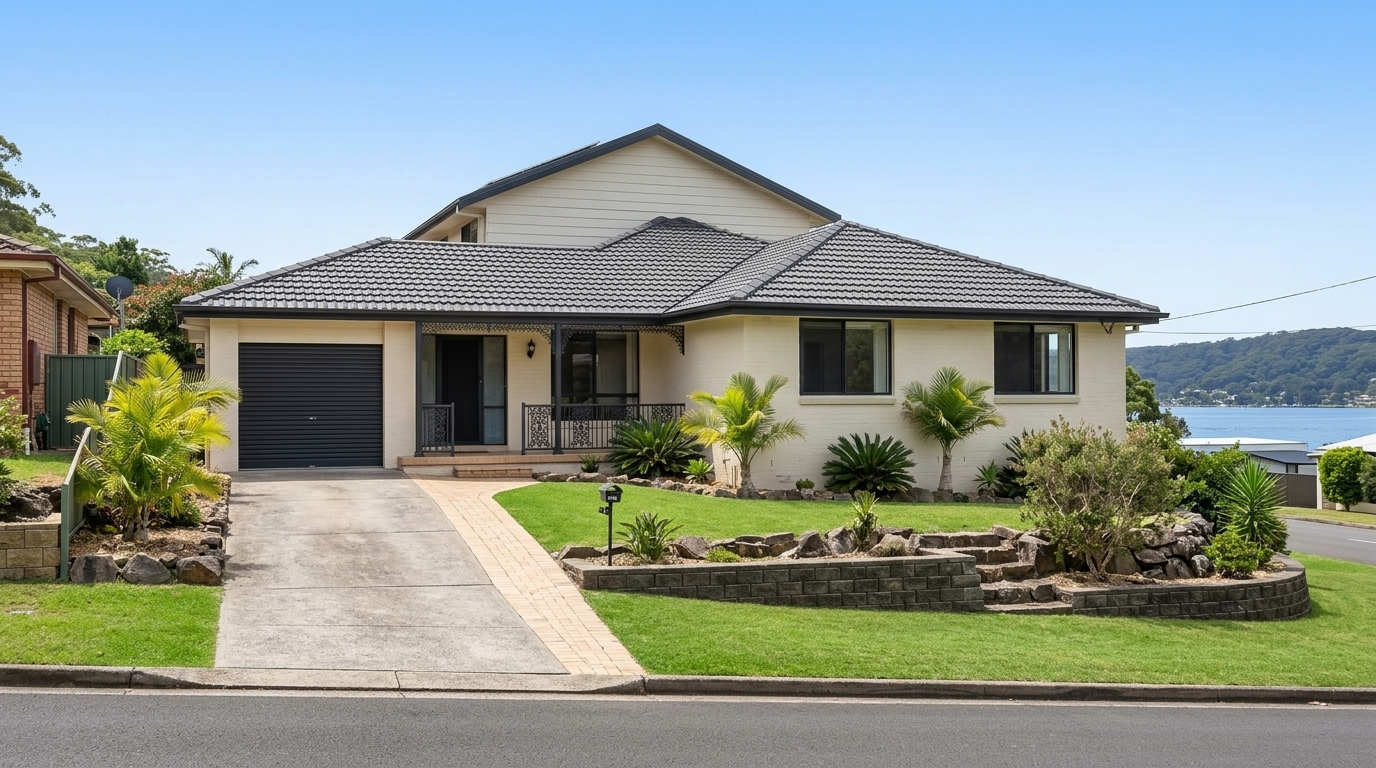
When the Reserve Bank of Australia moves the cash rate, the ripple effects reach every street in Blackwall, from the townhouse blocks along Memorial Avenue to the deep-waterfront homes on Orange Grove Road. Interest rates are one of the most powerful levers on property prices because they directly change how much buyers can borrow.
The mechanism is simple. The RBA sets the cash rate, which flows through to mortgage rates. When rates fall, borrowing becomes cheaper and buyers can service larger loans; more borrowing power means more competition, and prices rise. When rates increase, borrowing capacity shrinks and price growth cools. In Blackwall, where the median mortgage repayment sits at $2,024 a month, changes in borrowing costs directly reshape what buyers can offer.
Blackwall’s market is not one thing. It is at least three. There are entry-level townhouses around $570,000 to $760,000, standard family houses on 450 to 700 m² blocks from about $950,000 to $1.5 million, and premium waterfront homes along Orange Grove Road where sales reach $3.2 million to $6.9 million. Each segment feels rate moves differently.
The Mechanics: How Rate Changes Reach Blackwall
A 0.50% rise in mortgage rates typically reduces borrowing power by about 5%. The RBA’s three hikes in 2026 (February, March, and May) added 0.75% to the cash rate, taking it to 4.35%. For a family that could borrow $800,000 at the start of the year, their maximum loan might now be closer to $740,000. That $60,000 gap is the difference between a house on Commonwealth Avenue and a townhouse instead.
The APRA serviceability buffer magnifies the effect. Banks assess repayments as if rates were 3% higher than the actual loan rate, so when the cash rate rises, assessed borrowing capacity shrinks further.
This matters because Blackwall’s buyer base is broad. Census data shows a median household income of $1,449 a week. First-home buyers eyeing townhouses in the $700,000s feel rate rises acutely; investors with rental income are cushioned; and premium Orange Grove Road buyers, often purchasing with significant equity, are barely affected. A 0.25% move that sidelines a young couple on Warwick Street barely registers for a downsizer buying a waterfront home.
The Rate Cycle: A Timeline
2020 to 2022: The low-rate boom. The RBA cut the cash rate to 0.10% in November 2020, holding it until May 2022. The Central Coast house market rose 45.1% over the five years to late 2025. As Cotality’s Eliza Owen noted, “the big boom in housing values across the Central Coast happened between early 2020 and many markets found a high in early 2022 just before interest rates started rising.”
2022 to 2023: Tightening. The RBA embarked on its most aggressive hiking cycle in a generation, and price growth moderated.
2025: Relief. After holding through 2024, the RBA cut three times, the first cuts since November 2020, bringing the cash rate to 3.60%. The Gosford sub-region, which includes Blackwall, responded with 8.4% annual growth as buyer competition reignited.
2026: Reversal. The RBA raised rates in February, March, and May, lifting the cash rate to 4.35% and reshaping the market through the first half of 2026.
Blackwall’s Market Through the Cycle
Rate turbulence has not changed the long-term performance. The 10-year compound annual growth rate is 6.9%, and over 36 years the CAGR is 6.3%. The 10-year price movement of 106.48% means values have more than doubled in a decade. Annual house price growth sits at 8.0%, according to Property.com.au.
Recent sales confirm an active market. In May 2026, the same month as the third RBA hike, 26 Springwood Street sold for $1,150,000 and 36 Commonwealth Avenue for $1,180,000. Earlier, 41 Gallipoli Avenue went for $1,175,000. At the entry level, 3/43 Memorial Avenue sold for $760,000 in May 2026, while 2/11A Warwick Street went for $570,000 in late 2024.
The premium end follows its own rhythm: 464 Orange Grove Road sold for $4,400,000 in March 2024, and 456 Orange Grove Road changed hands for $4,065,000 a month earlier. These buyers are typically less mortgage-dependent, so rate movements barely shift their decisions.
According to WhichAgent, 97 properties sold in Blackwall in the 12 months to mid-2026, with houses averaging 73 days on market.
What Rate Changes Mean for Buyers and Owners Today
First-home buyers: Townhouses in the $570,000 to $760,000 range offer an achievable entry point. NSW stamp duty exemptions up to $800,000 and the federal Help to Buy scheme reduce upfront costs. Higher rates mean less competition. For a buyer with pre-approval and patience, that can mean a better deal.
Families and upgraders: Standard houses in the $950,000 to $1.3 million range represent strong value relative to Sydney. A home on a 600 m² block, a five-minute drive from the Woy Woy waterfront and a 70 to 75 minute train commute to Sydney, has drawn families to the Peninsula for decades.
Investors: A 1.30% vacancy rate, house rents rising 18.18% over the past year to $650 a week, and a rental yield of 2.70% for houses provide solid fundamentals, per RealEstateInvestar. Townhouse rents sit at $550 per week. Rate rises that temporarily slow price growth can create favourable entry windows.
Existing owners: Long-term holders have seen substantial equity growth. The Peninsula’s structural housing undersupply provides a durable floor under values, and higher rates can make upgrading easier with fewer competing buyers.
Outlook: What Lies Ahead
Economists expect rate cuts by mid-to-late 2027. Domain forecasts a cut in Q2 2027, while ANZ predicts 25-basis-point reductions in both September and December 2027. When rates fall, borrowing capacity will rise and buyer activity should follow.
The structural case is even stronger. New building approvals on the Central Coast sit below 1% of existing stock, according to InvestorKit. The Woy Woy Peninsula is forecast for 4 to 6% annual growth through 2027, and the Gosford sub-region recorded 8.4% annual growth with a vacancy rate below 0.5%. When supply is this tight and Sydney-to-Coast migration continues, prices have a tailwind no single rate decision can reverse.
Blackwall’s advantages (Brisbane Water, Blackwall Mountain Reserve, the Rip Bridge, and a train line to Sydney) have supported decades of consistent appreciation and will keep drawing buyers regardless of where the cash rate sits.
Conclusion
A rate change of 0.25% or 0.50% shifts what some Blackwall buyers can offer and can cool or accelerate price growth. But rates operate within a market defined by limited supply, waterfront desirability, and steady long-term growth. Over 36 years and 1,884 recorded sales, per AusPropertyInsights, Blackwall property has appreciated at 6.3% a year, through rises, cuts, booms, and slowdowns. Blackwall’s mix of deep-water frontage on Orange Grove Road, bushland trails on Blackwall Mountain, and a train line to Sydney cannot be replicated elsewhere.
Frequently Asked Questions
How do RBA interest rate changes affect property prices in Blackwall?
The RBA cash rate flows through to mortgage rates, directly changing borrowing power. A 0.50% rate rise typically reduces it by about 5%. In Blackwall, where the median mortgage repayment is $2,024 a month, lower borrowing capacity tends to cool price growth while cuts boost it. The effect varies: premium Orange Grove Road buyers are far less rate-sensitive than first-home buyers targeting townhouses.
What has the RBA done with interest rates in 2025 and 2026 that affects Blackwall?
The RBA cut three times through 2025 (the first cuts since November 2020), bringing the cash rate to 3.60% and reigniting Central Coast buyer activity. In 2026, the RBA raised rates in February, March, and May, adding 0.75% to reach 4.35%. Blackwall’s market has been navigating this new environment since.
What is the current median house price in Blackwall and how has it grown over time?
The median house price in Blackwall is approximately $1,215,000, per Realestate.com.au. The 10-year CAGR is 6.9%, with values more than doubling (106.48% movement). Over 36 years, the CAGR is 6.3%, reflecting consistent appreciation through multiple rate cycles.
Is now a good time to buy in Blackwall given current interest rates?
Every rate environment creates opportunity. Higher rates mean lower borrowing capacity but less competition; 97 properties sold in Blackwall over the past year, with houses averaging 73 days on market. The suburb’s 6.9% 10-year CAGR, limited Peninsula supply, and waterfront lifestyle do not depend on where rates sit in any month. For buyers with secure finance and a medium-term view, rate-driven uncertainty has historically been a good entry window.
How do interest rates affect first-home buyers differently from investors in Blackwall?
First-home buyers are more rate-sensitive, typically borrowing at higher loan-to-value ratios without rental income as a buffer. However, NSW stamp duty exemptions up to $800,000 and the Help to Buy scheme help. Investors benefit from Blackwall’s strong rental returns: house rents rose 18.18% over the past year to $650 a week, townhouse rents sit at $550 per week, and a 1.30% vacancy rate and 2.70% rental yield provide income support.
Do interest rate changes affect all parts of the Blackwall property market equally?
No. Premium waterfront homes on Orange Grove Road ($3.2M to $6.9M) operate separately from standard residential streets. Top-end buyers often purchase with significant equity or cash, so rate moves barely influence decisions. Buyers in the $700,000 to $1.3 million range, where most transactions happen, are much more rate-sensitive.
What happened to Blackwall property prices during the 2025 rate-cutting cycle?
When the RBA cut three times through 2025, the Gosford sub-region recorded 8.4% annual growth. Buyer competition lifted across Blackwall, from Memorial Avenue townhouses to Gallipoli Avenue houses, with sustained sales activity and price growth, showing how falling rates quickly reignite demand.
How does Blackwall’s price growth compare to the broader Central Coast and Sydney?
Blackwall’s 10-year CAGR of 6.9% is strong. The Central Coast delivered 45.1% house price growth over five years to late 2025. Blackwall remains more affordable than Sydney while offering waterfront living and a 70 to 75 minute train commute. The Peninsula is forecast for 4 to 6% annual growth through 2027.
Should property owners in Blackwall be concerned about rising interest rates?
For long-term owners, the evidence is reassuring: a 36-year CAGR of 6.3% means values have grown across every rate cycle. Prices have more than doubled in 10 years. The Peninsula’s limited land supply, waterfront amenity, and sustained demand from Sydney migration provide durable price support.
What is the outlook for interest rates and Blackwall property prices over the next one to two years?
Economists expect rate relief by mid-to-late 2027: Domain forecasts a Q2 2027 cut, while ANZ predicts 25-basis-point cuts in September and December 2027. The Central Coast’s housing undersupply (new approvals below 1% of stock) and Blackwall’s 1.30% vacancy rate point to continued price support. Eventual rate relief, tight supply, and lifestyle appeal position Blackwall well for long-term growth.