
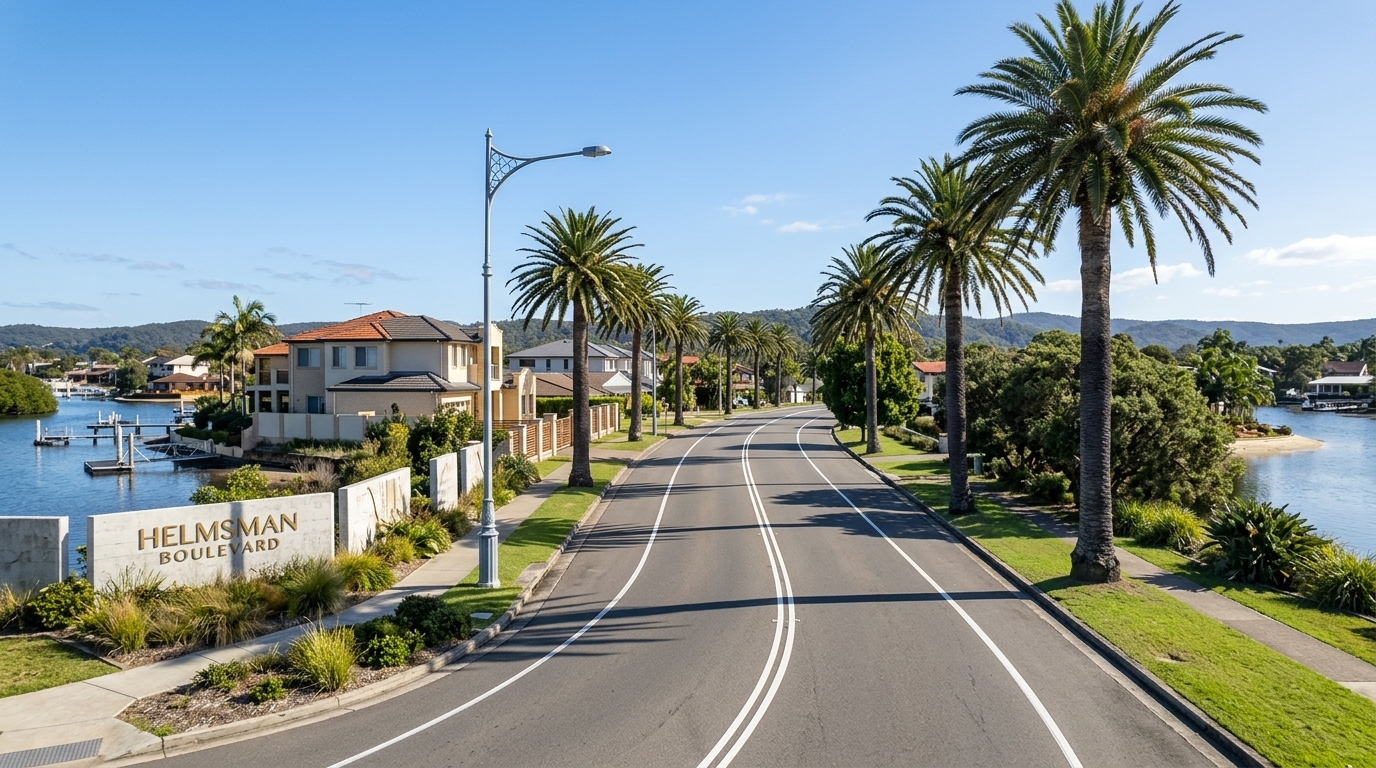
Introduction: the first-impression island
Every buyer arrives on St Huberts Island the same way. They cross the single bridge onto Helmsman Boulevard, pass the statement wall and avenue of palms that mark the entrance, and cruise the quiet canal streets before they reach your front door. That arrival is already doing part of the selling for you.
Staging is simply how you extend that first impression indoors, without a developer-size budget. On an island of about 0.6 square kilometres surrounded by Brisbane Water, the two things buyers want most, water and light, are already on the block. Your job is to clear the path to them.
Let the island do the selling: work with water, light and outlook
St Huberts Island homes already hold the two features buyers pay the most for here. Most houses front an internal canal or Brisbane Water, and many have their own private pontoon. The island’s comprehensive guides describe the same draw: calm canals, water access and a relaxed waterfront setting.
That makes your staging job simpler than you think. Angle the seating toward the water rather than the television wall. Keep window lines open and resist placing a tall bookcase in front of the glass. The island is overwhelmingly detached houses: 434 of 448 occupied dwellings (97 per cent) are separate houses. In those single-storey and double-storey homes, the rooms that frame the water are the ones buyers remember, so let that sightline read within seconds. The view does the heavy lifting, and your furniture just needs to stay out of its way.
Declutter and depersonalise for the canal-house buyer
Decluttering is the cheapest staging move there is, and it resonates strongly with the buyer profile on St Huberts Island. The median age is 58, most households are couples without children, and the average home has 3.7 bedrooms for just 2.3 people. Spare rooms and stored hobby gear are common, and they quietly shrink the rooms a buyer sees.
The buyers here, downsizers, retirees and weekender seekers, want to picture an easy, low-maintenance waterfront life. That weekender demand is real: 66 of the island’s private dwellings (13 per cent) were unoccupied at the last count. The figure points to a holiday-home and secondary-residence market. Clear the family photos, the personal collections and anything that marks the house as yours. When a room reads calm and open, it reads move-in ready. A buyer who can imagine their own boat gear, furniture and rhythm in the space is already mentally living there.
Maximise light and space with small, low-cost moves
The canals reflect light back into island interiors, which makes brightness one of your best free tools. Mirrors and glass-topped furniture bounce that light around, while opening the curtains or removing heavy window treatments lets it in. Brighter white bulbs and a couple of extra lamps warm up the corners that photos tend to flatten.
For space, remove the furniture nobody uses and keep the sofa a few centimetres off the wall. It sounds minor, but it gives a room breathing room. Rugs can separate living zones without adding walls, and a clear walking path makes the whole floor plan feel larger than its measurements suggest.
The three rooms that decide the sale
If the budget is small, put it where buyers look first: the kitchen, the master bedroom and the living room. In the kitchen, clear the benchtops, keep the sink empty and clean, and tuck bulky older appliances away. A tidy bench does more than an expensive one that is crowded.
In the master, fresh white linen is the fastest upgrade. Two or three simple cushions, a throw over the corner of the bed, and bedside tables with lamps are all you need. Finish the ensuite with fluffy white towels. In the living room, arrange the furniture so nobody walks into the back of the sofa, and cluster cushions at each end. These are the rooms where buyers judge everyday island life, and they are usually the ones that frame the water.
Stage the outdoors: pontoons, decks and the alfresco lifestyle
On St Huberts Island the outdoors matters as much as the interiors. Private pontoons, jetties, slipways and direct canal access are what set these homes apart, and recreation here runs on kayaking, paddleboarding, fishing and boating straight off the pontoon. Buyers clearly weigh these spaces in the price: a recent 11 Mainsail Avenue sale reached $2.3 million with a newly built jetty, mooring pole and slipway complete with an electric winch.
Treat the deck and alfresco area as a bonus living room rather than storage. Tidy the jetty and waterline, angle outdoor seating toward the water, and add weather-resistant cushions plus a few pots of greenery. Then keep the sightline from inside running straight out to it. You want a buyer to step from the lounge and already see themselves on the water.
Deep clean and finishing touches that feel like a holiday house
A deep clean is the finishing move that holds everything else together, and on a canal estate it pays to obsess over the windows. Clean glass is how the view gets delivered. Keep scents subtle and fresh, add soft white towels, a throw rug or two and some greenery, and stick to a coastal-neutral palette for the final styling touches.
Think of it as dressing the home like a resort weekender. With no shops or commercial premises on the island, the quiet, retreat-like setting is part of the appeal. Short-stay holiday demand exists here because the island already feels like a getaway, so a home that photographs like a holiday house appeals to owner-occupiers and weekender buyers alike. The goal is a place that feels cared for and instantly liveable.
DIY vs professional styling: what budget staging costs on the Central Coast
On the Central Coast, professional styling usually runs about $2,000 to $5,000 depending on the size of the property. The return is worth knowing: staging is linked to a 5 to 10 per cent higher sale price, with staged homes reportedly selling for up to 17 per cent more and 95 per cent selling within 11 days.
You do not have to go all in. Partial styling, where a stylist blends your existing furniture with a few hired pieces, is the budget middle path. It gives a curated look without the full fit-out cost. You handle the decluttering and cleaning yourself, then bring in help for the rooms that need polish.
Conclusion: small spend, island-sized return
Staging on St Huberts Island is a small spend against a large number. The median sale price across 400 recorded transactions is $1.13 million, and premium canal-front homes regularly trade between $2.5 million and $6 million. Against those figures, a $2,000 to $5,000 styling budget is well under one per cent of the sale price.
The moves that matter most here, clear sightlines, light, calm rooms and a tidy pontoon, are mostly effort rather than expense. Talk to Stone Real Estate about which presentation moves will matter most for your specific home, and you can put a polished, water-focused first impression in front of every buyer who crosses that bridge.
Frequently Asked Questions
How much does home staging cost for a st-huberts-island property?
Professional styling on the Central Coast typically costs between $2,000 and $5,000 depending on the size of the home. DIY decluttering, cleaning and accessorising costs far less, and partial styling that blends your own furniture with hired pieces sits in the middle.
Do I need to stage a waterfront st-huberts-island home if the view already sells it?
The view is the star, but staging clears the sightlines and frames the water so it is seen at its best. A decluttered, light-filled room makes the outlook feel like part of the living space rather than a window you simply walk past.
What are the cheapest staging upgrades for a st-huberts-island home?
Declutter, clean the windows, add mirrors, brighten the lighting, open the curtains and remove excess furniture. Most of these cost little or nothing, and together they make the island’s natural light and canal outlook read instantly.
Which rooms should I prioritise when staging a st-huberts-island home on a budget?
Kitchen, master bedroom and living room. Clear the kitchen benches, dress the master with fresh white linen, and open the living room so buyers never walk into the back of the sofa.
Should I stage the pontoon and outdoor area when selling my st-huberts-island home?
Yes. Outdoor spaces are a major selling point here. Tidy the jetty and waterline, angle seating toward the water, add weather-resistant cushions and potted greenery, and keep the sightline from indoors clear.
Can I stage my st-huberts-island home myself, or do I need a professional stylist?
You can DIY it with a simple seven-step routine: repairs, declutter, depersonalise, maximise light, focus on the key rooms, deep clean and add finishing touches. Partial styling is a good middle ground if you want a professional eye without a full hire package.
How early should I start staging my st-huberts-island home before listing?
Start several weeks out. Do any repairs and painting first, then declutter, clean and style in time for professional photos and the first open home.
What colours work best when staging a st-huberts-island canal-front home?
A light, neutral, coastal palette works best: whites, soft sands and muted blues. These keep rooms bright and let the water outlook stay the dominant feature.
Does staging actually help a st-huberts-island home sell faster?
The Central Coast data says yes. Staged homes are reported to sell within 11 days in 95 per cent of cases, and staging is linked to higher sale prices, so it supports both speed and result.
What should I remove when depersonalising my st-huberts-island home?
Family photos, personal collections, hobby items, hygiene products and anything overly personal. The idea is to let buyers picture their own life in the space.
Is staging worth it for a holiday home or weekender on st-huberts-island?
Yes. A resort-style, holiday-ready presentation suits both owner-occupiers and the short-stay weekender appeal, which can widen the pool of buyers who see themselves using the home.
What if I can’t afford to replace all my furniture before selling my st-huberts-island home?
You do not need to. Partial styling blends your own furniture with hired pieces, and strategic removal plus simple accessorising of existing pieces can deliver a polished look without a full hire package.