
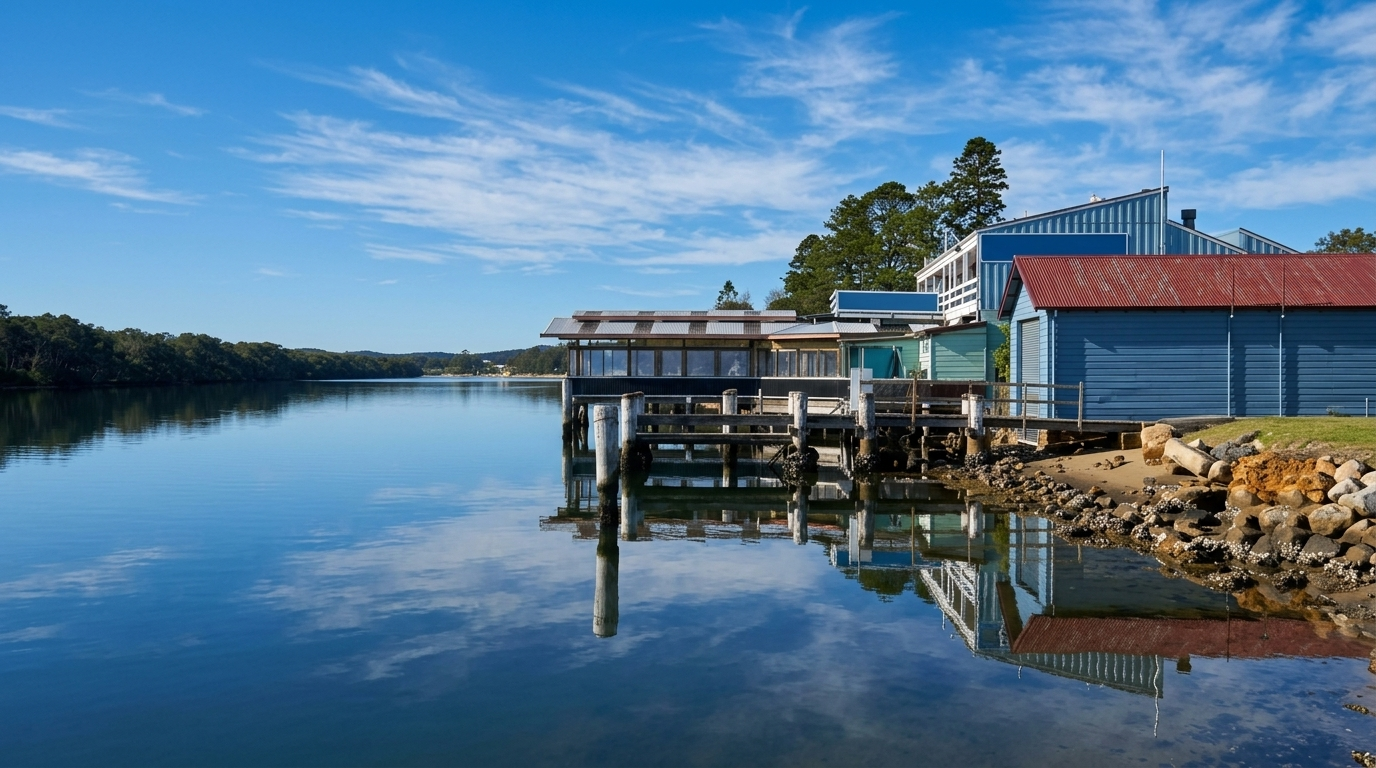
Every property investor eventually lands on the same question: do I buy for the income that lands in the bank each week, or the growth I will bank when I sell? In many markets that is a genuine trade-off. In Woy Woy it does not have to be.
This is a waterfront commuter town about 80 kilometres north of Sydney, with a direct rail line, a rental vacancy rate below one per cent, and a market that has been compounding for years. Rental yields run around 3 to 4 per cent depending on property type, while houses have added roughly 8.5 per cent over the past year and units are up close to 19 per cent. Here is a suburb-specific way to weigh the two.
Woy Woy’s capital growth story
Woy Woy’s growth is broad-based right now, and it is being led by units. OpenAgent puts the median house at $1.15 million and the median unit at $850,000, with an overall median dwelling price of $1,000,000. Over 12 months those two figures have moved in different gears: houses up 8.5 per cent and units up 19.4 per cent.
This is not a single hot year. Realestate.com.au tracks house growth at roughly 15 per cent a year compounded over five years. Zoom out further and Central Coast houses have grown more than 130 per cent over the past decade. The forward view is steadier but still positive: SFP Financial forecasts 4 to 6 per cent annual Peninsula growth, with Woy Woy’s median reaching about $1.1 to $1.15 million by 2027.
Growth here has come through houses and units alike, across a stretch long enough to count as a trend: five years of roughly 15 per cent annual house growth and a decade of more than 130 per cent growth across Central Coast houses.
The yield picture in Woy Woy
The income side is where Woy Woy’s numbers stack up well. OpenAgent lists average weekly rents at $630 for houses and $520 for units. What matters more is how those rents convert into yield, and that depends on what you buy.
Houses deliver roughly 3.0 to 3.6 per cent gross yield, with realestate.com.au quoting 3.5 per cent and Your Investment Property Mag at 3.55 per cent. Units sit around 3.7 per cent, while townhouses are the standout at just over 4 per cent, according to Real Estate Investar.
Those yields rest on a rental market that is genuinely tight. Woy Woy’s suburb-level vacancy rate is 0.83 per cent on Real Estate Investar’s figures, and the wider Central Coast sub-region is running below 0.5 per cent, according to InvestorKit. Rents rose 5.0 per cent for houses and 4.4 per cent for units over the past year, per OpenAgent. When stock is that scarce, the income line tends to keep improving even before growth enters the equation.
What drives each side of the equation
The reason Woy Woy can offer both returns at once is that they share the same foundations.
The train is the first one. Woy Woy sits on the Central Coast and Newcastle line with a direct Sydney service of about 75 to 80 minutes and peak trains roughly every 20 minutes, according to Transport NSW. That keeps a steady pool of tenants and buyers who want the commute without the Sydney price tag. The station is about a five minute walk from the waterfront, which makes the town centre workable for renters who rely on the rail line.
Sydney-to-Coast migration is the second driver, which SFP Financial identifies as a demand theme. Buyers and renters leaving the city keep trading Sydney prices for a waterfront lifestyle at roughly half the price, and the peninsula keeps absorbing it.
Then there is the lifestyle itself. Brisbane Water, Fishermen’s Wharf, Lions Park, the 7.2 kilometre foreshore walk, Everglades Country Club and Brisbane Water National Park are all on the doorstep. This is the “why people stay” factor that supports both the rent and the resale value over the long run.
Planning adds the longer-term angle. Woy Woy was added to the state’s transport oriented development list in April 2024, allowing higher density within 400 metres of the station, and 2026 brought a reported high-rise green light for the town centre. The demographic base is also steady: a median age of 48, per Your Investment Property Mag, and 39.9 per cent of homes rented, per OpenAgent, mean there is a large, established rental pool alongside downsizer and commuter demand.
How to balance yield and growth in Woy Woy
The way to balance the two returns is to make three deliberate choices rather than treating yield and growth as rivals.
Match property type to goal. Townhouses and villas offer the highest yield, around 4 per cent, at a lower entry point. Real Estate Investar shows median townhouse listings around $710,000 against a median house listing near $980,000. Freestanding houses lean toward scarcity-driven growth, and units offer a lower entry point with the strongest recent growth. OpenAgent records 44 houses and 13 units sold in the most recent quarter, with median days on market of 33 and 29, so demand is broad across the board.
Match location to strategy. If cash flow leads, look near the station and town centre, where rental demand and convenience are strongest. If growth leads, the waterfront and waterview pockets carry the premium. Recent sales on Brick Wharf Road have ranged from $1.75 million to $2.05 million, according to NSW Valuer General property sales records, which shows what buyers will pay for the water.
Match timeframe to goal. Growth investors should think in five to seven year terms and lean on the long track record. Income-focused investors can lean on the vacancy rate below one per cent and rising rents. A balanced holding can do both at once: a steady weekly return while the underlying asset compounds. Stone Real Estate’s local team can help match a property to whichever strategy you are prioritising.
Conclusion
Woy Woy lets you hold two numbers in your head at the same time. You can earn a 3 to 4 per cent yield while the market adds roughly 8.5 per cent a year on houses and close to 19 per cent on units. Neither number tells the whole story on its own.
The better way to frame the decision is as a portfolio question, not a suburb question. Choose a townhouse near the station if income leads, a waterfront house if growth leads, or something in between for a blend of both. The commuter line, the waterfront lifestyle and the planning momentum around the town centre are all still working in your favour.
Frequently Asked Questions
What is the average rental yield for a Woy Woy investment property?
It depends on the property type. Houses in Woy Woy typically yield around 3.0 to 3.6 per cent, units around 3.7 per cent, and townhouses just over 4 per cent. The townhouse figure of 4.02 per cent comes from Real Estate Investar, while realestate.com.au quotes 3.5 per cent for houses and 3.7 per cent for units.
How fast are Woy Woy property prices growing?
Fast on the unit side and solid on houses. OpenAgent shows house values up 8.5 per cent and unit values up 19.4 per cent over the past year. Five-year house growth has compounded at around 15 per cent annually, per realestate.com.au, and the forward forecast sits at 4 to 6 per cent a year, per SFP Financial.
Which property type offers the best yield in Woy Woy?
Townhouses and villas lead, returning roughly 4.02 per cent on a median listing price around $710,000. Units come next at about 3.7 per cent, and houses sit between 3.0 and 3.6 per cent. If income is the priority, the townhouse bracket is the most efficient entry point.
Is Woy Woy a good suburb for capital growth?
It has a long track record. Central Coast houses have grown more than 130 per cent over the past decade, Woy Woy houses have compounded at about 15 per cent a year over five years, and units are up close to 19 per cent over the past 12 months. The commuter rail line, lifestyle appeal and town-centre planning momentum all point the same way.
What is the current vacancy rate in Woy Woy?
Woy Woy’s vacancy rate is 0.83 per cent, with the wider Central Coast sub-region running below 0.5 per cent. For a landlord that means rental stock is scarce, tenants move in quickly, and rents keep drifting higher.
Should I prioritise rental yield or capital growth in Woy Woy?
It depends on your goal and timeframe. Income-focused investors tend to lean on townhouses or units near the station, where yield and tenant demand are strongest. Growth-focused investors lean on houses and waterfront positions over a five to seven year horizon. Plenty of Woy Woy holdings do a bit of both.
How does Woy Woy compare to nearby Peninsula suburbs for investors?
Woy Woy is the transport and service hub of the peninsula, which gives it a commuter-driven demand base all its own. Its median house price sits 4.2 per cent below Blackwall’s, and houses sell 19.5 per cent faster than in Koolewong, according to OpenAgent. It also prices below the beachside neighbours: OpenAgent lists Umina Beach’s median house at about $1.21 million and Ettalong Beach’s at about $1.32 million. That combination of relative value, town-centre amenity and faster turnover is a useful investor signal.
What is driving rental demand in Woy Woy?
A direct Sydney train service of about 75 to 80 minutes, steady Sydney-to-Coast migration, a large downsizer base and a rental share of 39.9 per cent of homes. The median age of 48 also points to a settled renter and downsizer pool that values a walkable town centre close to the waterfront.
How much should I budget for an investment property in Woy Woy?
Units start around the $850,000 median, townhouse listings sit near $710,000, and the median house is about $1.15 million. Waterfront positions cost more, with recent Brick Wharf Road sales ranging from $1.75 million to $2.05 million, according to NSW Valuer General property sales records.
Is now a good time to buy an investment property in Woy Woy?
The signals are supportive for a five to seven year lens: rents are rising, vacancy is below one per cent, the forward forecast is for 4 to 6 per cent annual growth, and the town-centre density plans are still rolling out. Buyers who match the property type and location to their own strategy are best placed to benefit.