
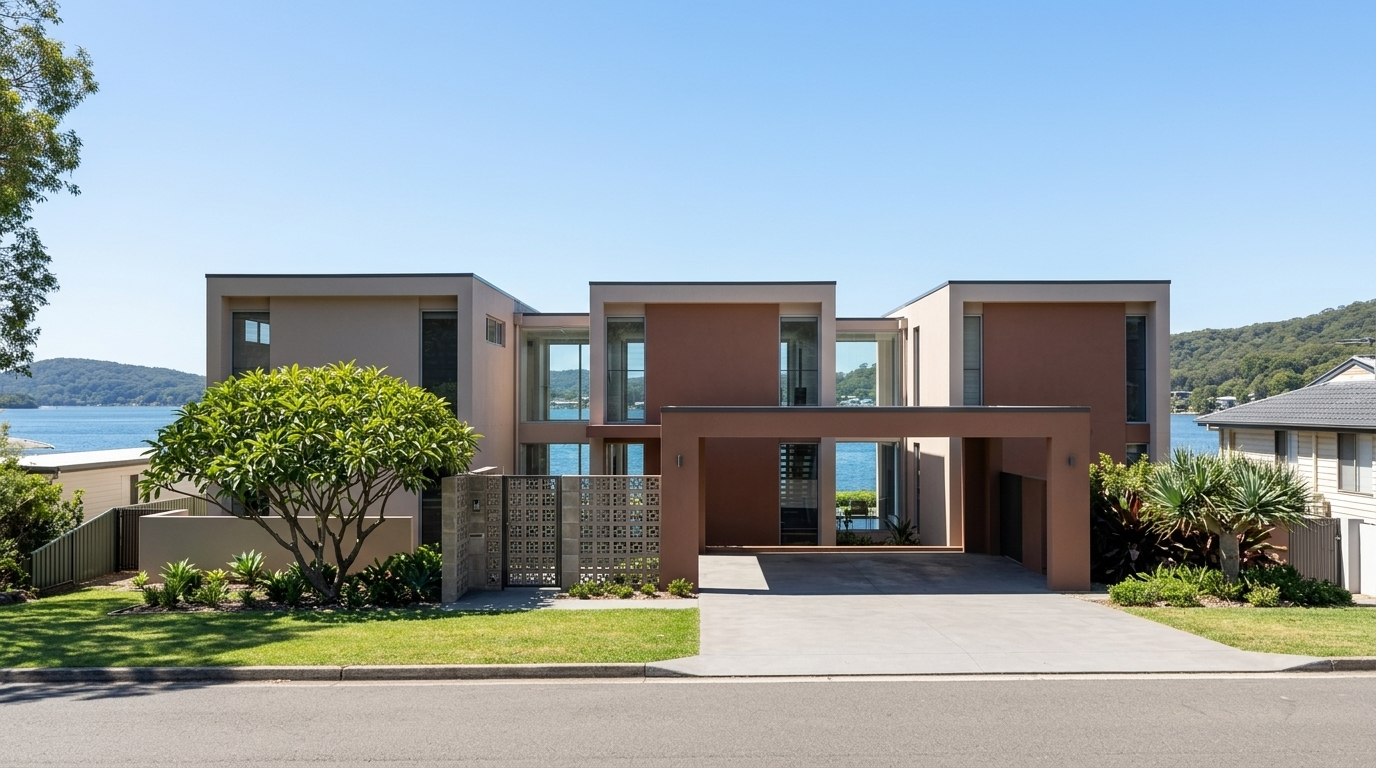
In Blackwall, roughly one in every four dwellings is rented, and the property market spans mid-century cottages on 450 to 700 m² blocks to architect-designed waterfront homes along Orange Grove Road fetching north of $6 million. Median house rents sit at $650 per week with a vacancy rate of 1.30%. For investors who stop at the purchase price, a large part of the return equation stays buried. A tax depreciation schedule, prepared once and used for the life of the property, can unlock thousands of dollars in annual deductions, and in a suburb with housing stock as varied as Blackwall’s, the range of what’s claimable is broader than many buyers realise.
What Is a Depreciation Schedule?
A depreciation schedule is a detailed report prepared by a qualified quantity surveyor that catalogues every depreciable element of an investment property and maps out exactly what you can claim, year by year, against your taxable income. This is not a rough estimate or a back-of-the-envelope calculation; it is an ATO-compliant document that becomes the basis of your annual tax deductions for as long as you hold the property.
The report covers two categories: the building’s structure and its removable fixtures and fittings. Once prepared, the schedule is valid for the depreciable life of the property (typically up to 40 years), making the one-off fee of around $400 to $800 a sound investment at settlement. The schedule fee itself is also 100% tax deductible.
The Two Kinds of Depreciation: Division 40 and Division 43
Australian tax law splits property depreciation into two buckets.
Capital works deductions (Division 43) cover the building’s structure: walls, roof, floors, fixed plumbing, and structural improvements. For residential properties where construction commenced after 15 September 1987, these are claimed at 2.5% per annum over 40 years from completion. As an illustrative example, a property with an estimated construction cost of $300,000 (at the conservative end for a basic Central Coast home, where builders report costs of roughly $2,000 to $3,200 per square metre) generates roughly $7,500 in annual capital works deductions, claimed evenly across four decades.
Plant and equipment deductions (Division 40) cover removable, replaceable assets: carpets, blinds, ovens, dishwashers, air conditioners, and hot water systems. These are claimed over each item’s ATO-determined effective life (a dishwasher over 8 years, carpet over 10), using either the diminishing value or prime cost method. Diminishing value front-loads deductions into the early years; prime cost spreads them evenly.
One practical detail worth knowing: depreciating assets costing $300 or less can be written off immediately in the year of purchase, rather than depreciated over their effective life. This is useful for investors doing minor upgrades like replacing a ceiling fan or installing new blinds. Note that the asset cannot be part of a set that collectively costs more than $300.
Capital works typically make up 85 to 90% of a total claim, so a property’s construction date and renovation history matter far more than the condition of its curtains.
Why Blackwall’s Housing Mix Makes Depreciation Especially Relevant
Blackwall is not a suburb of uniform age. The 2021 Census recorded 585 separate houses (65% of dwellings) and 188 townhouses and semi-detached homes (21%), with only 21 flats. The housing stock spans decades, and each decade tells a different depreciation story.
The detached houses are predominantly mid-20th-century builds from the 1950s to 1970s. An entry-level house on a 480 to 500 m² block (like those sold recently on Warwick Street or Memorial Avenue in the $940,000 to $1,050,000 range) may be a pre-1987 construction. But if that house has had a kitchen renovation, bathroom update, or extension, a quantity surveyor’s site inspection can identify claimable capital works and plant and equipment from those improvements.
Then there are the modern townhouses. Along Warwick Street, Gallipoli Avenue, Warrigal Street, and Memorial Avenue, clusters of infill built in the last 10 to 20 years tell a different story. A modern 3-bedroom townhouse purchased for $840,000 to $1,200,000 (like the one that sold at 1/56 Commonwealth Avenue in April 2026 for $840,000) qualifies for capital works deductions on its structure. If the townhouse is purchased as a brand-new first sale from the developer, the investor also unlocks the full suite of Division 40 plant and equipment deductions, and BMT data shows brand-new properties average over $15,000 in first-year claims. For an established townhouse bought after May 2017, capital works remain fully claimable and any new plant and equipment the investor installs is deductible, with established post-2017 properties averaging around $6,249 nationally.
At the upper end, Orange Grove Road’s deep-waterfront homes (recent sales from $3.2 million to $6.9 million) are often contemporary builds or substantially renovated residences. A property constructed or fully rebuilt within the last decade generates capital works claims against a high construction cost, making the depreciation schedule worth tens of thousands of dollars over its lifetime.
The 2017 Rule Changes and What They Mean for Blackwall Buyers
On 9 May 2017, the rules changed. For residential investment properties purchased on or after that date, investors can no longer claim depreciation on existing second-hand plant and equipment (the oven, carpets, and blinds that came with the property).
But capital works deductions were left completely untouched. If the building is eligible (construction commenced after 15 September 1987), you can still claim the full 2.5% per annum on the structure. And any brand-new plant and equipment you install yourself after settlement is fully claimable from day one.
Substantial renovations completed by a previous owner can also unlock claims on both capital works and plant and equipment. A physical site inspection is especially useful in Blackwall, where incremental updates have been layered onto older stock for decades. What looks like a mid-century cottage from the street may have a 2018 extension and new floor coverings throughout, all carrying depreciation value a desktop estimate would miss.
Real Numbers: What Depreciation Looks Like in Dollar Terms
According to BMT Tax Depreciation, the national averages for the 2021 to 2022 financial year were:
- Brand-new properties: $15,363 in first full-year deductions
- Established properties (all ages): $8,032 in first full-year deductions
- Properties affected by the 2017 legislation (established, post-May 2017 purchase): $6,249
- Properties built in 1987 or earlier: $5,403
In Blackwall terms, take a $1,050,000 established house (like 311 Blackwall Road, sold in February 2026). If it returned in line with the national established-property average of $6,000 to $8,000 in first-year deductions, an investor in the top tax bracket (45% plus 2% Medicare Levy) would see roughly $2,820 to $3,760 in tax saved. Add standard rental deductions (loan interest, council rates, insurance, property management fees) and a negatively geared property can shift closer to cash-flow neutral.
At the newer end, an $840,000 townhouse built within the last five years and purchased as a first sale from the developer might return $10,000 to $15,000 in first-year claims. The roughly $700 schedule fee (fully tax deductible) is recouped many times over in the first return.
How to Get a Depreciation Schedule: The Practical Steps
The process is straightforward, but one rule is non-negotiable: the schedule must be prepared by a qualified professional. The ATO specifies that only a quantity surveyor who is a member of the Australian Institute of Quantity Surveyors (AIQS) or a Chartered Surveyor with the Royal Institution of Chartered Surveyors (RICS) can estimate construction costs for depreciation purposes. Your accountant cannot prepare it, though they will use it for your tax return.
Once engaged, the quantity surveyor conducts a site inspection (measuring, photographing, and cataloguing every depreciable element). The resulting report is a one-off document; it does not need annual renewal and is applied each tax year for as long as you hold the property.
Order the schedule as soon as possible after settlement. If your tax return has already been lodged without it, the ATO allows you to amend previous returns within applicable time limits. Earlier is better, but late is not lost.
Depreciation as Part of a Bigger Investment Picture in Blackwall
Blackwall’s underlying investment fundamentals are strong. The suburb’s population of 1,941 grew 2.81% between 2016 and 2021, and it has delivered an average of 8.7% annual house price growth over the past decade. The rental market remains tight (a 1.30% vacancy rate with median house rents climbing 18.18% year-on-year). The Central Coast’s appeal as a lifestyle destination, with Brisbane Water, Blackwall Mountain, and proximity to Ettalong and Umina beaches, continues to attract tenants. The train from nearby Woy Woy Station reaches Sydney’s CBD in about 70 to 75 minutes, keeping the suburb within commuting range.
With more than a quarter of the population renting, Blackwall has a deep, sustained tenant base. And in a market where yields sit at 2.70% for houses, every dollar of after-tax return counts. Depreciation tilts the equation, not by changing the rent or the growth trajectory, but by reducing the tax paid on the income the property already generates.
Conclusion
For Blackwall investors, a depreciation schedule is a standard part of maximising an investment’s after-tax position. Whether you’re buying a character home on Commonwealth Avenue, a modern townhouse off Gallipoli Avenue, or a deep-waterfront property on Orange Grove Road, a professionally prepared schedule converts unclaimed depreciation into annual tax savings. Leaving depreciation unclaimed reduces after-tax returns on a property that is already generating income.
Frequently Asked Questions
What exactly is a tax depreciation schedule in Blackwall?
A tax depreciation schedule is a report by a qualified quantity surveyor that lists every depreciable element of a Blackwall investment property. It covers capital works (the building’s structure, claimed at 2.5% per year over 40 years) and plant and equipment, such as carpets, blinds, and appliances, claimed over each item’s ATO-determined effective life. The schedule costs roughly $400 to $800, is 100% tax deductible, and remains valid for the lifetime of the property.
Do I need a depreciation schedule if my Blackwall investment property is old?
Yes. National data from BMT Tax Depreciation shows properties built in 1987 or earlier still averaged $5,403 in first-year deductions. If an older Blackwall home has had renovations (a kitchen update, bathroom refresh, or extension), those improvements carry their own capital works eligibility and potentially new plant and equipment claims. A site inspection identifies items a desktop estimate would miss.
What is the difference between Division 40 and Division 43 for a Blackwall property?
Division 43 covers capital works (the building’s structure: walls, roof, floors, fixed plumbing), claimed at 2.5% per year over 40 years for properties where construction started after 15 September 1987. Division 40 covers plant and equipment (removable assets like carpets, blinds, ovens, and air conditioners), claimed over each item’s ATO-set effective life. Capital works typically make up 85 to 90% of the total claim.
How much does a depreciation schedule cost in Blackwall and is it worth it?
A depreciation schedule typically costs $400 to $800, and the fee is fully tax deductible. National averages show established properties claim $6,000 to $8,000 in first-year deductions, while brand-new properties can exceed $15,000. The schedule pays for itself many times over in the first return.
Can I claim depreciation on a townhouse in Blackwall?
Absolutely. Property type matters less than age and construction date. Many of Blackwall’s modern townhouses along Warwick Street, Gallipoli Avenue, and Memorial Avenue were built after 1987 and are eligible for capital works deductions. A brand-new townhouse in the $840,000 to $1,200,000 range purchased as a first sale from the developer unlocks the full suite of both Division 43 and Division 40 deductions, potentially returning $10,000 to $15,000 in first-year claims.
How did the 2017 depreciation rule changes affect Blackwall investors?
For Blackwall properties purchased after 9 May 2017, investors can no longer claim depreciation on existing second-hand plant and equipment (the oven, carpets, and blinds that came with the property). However, capital works deductions remain fully unaffected, and any brand-new plant and equipment you install after settlement is fully claimable. Since capital works make up the bulk of most claims, the 2017 changes reduced rather than eliminated the depreciation benefit.
If I am buying a renovator in Blackwall, can I claim depreciation on the renovation?
Yes. Any new plant and equipment you install during a renovation (air conditioner, oven, carpet, blinds) is fully claimable under Division 40. The capital works on the renovation itself (new walls, extension, structural improvements) are claimable under Division 43. Additionally, substantial renovations by a previous owner may be claimable; a quantity surveyor’s site inspection can uncover these, which is particularly valuable in Blackwall given the suburb’s history of incremental updates.
When should I order a depreciation schedule for my Blackwall investment?
Order as soon as possible after settlement. The schedule cannot be prepared before you own the property because the quantity surveyor needs access for a site inspection. If you lodge your return before receiving the schedule, the ATO allows you to amend previous returns within applicable time limits. Earlier is better for cash-flow planning, but late is not lost.
Does a depreciation schedule affect capital gains tax when I sell my Blackwall property?
Yes. Capital works deductions reduce the cost base of the property for CGT purposes, which can increase the taxable capital gain on sale. However, the annual tax savings during the holding period typically outweigh this adjustment; it is a timing benefit. A qualified accountant can model the net outcome for your specific circumstances.
Who can prepare a depreciation schedule for a Blackwall investment property?
Only a qualified quantity surveyor (typically a Certified Quantity Surveyor with the Australian Institute of Quantity Surveyors, or AIQS, or a Chartered Quantity Surveyor with the Royal Institution of Chartered Surveyors, or RICS) can prepare an ATO-compliant depreciation schedule for construction cost estimates. Your accountant cannot prepare the schedule, though they will use it for your tax return. Always confirm your surveyor’s credentials before engaging them.