
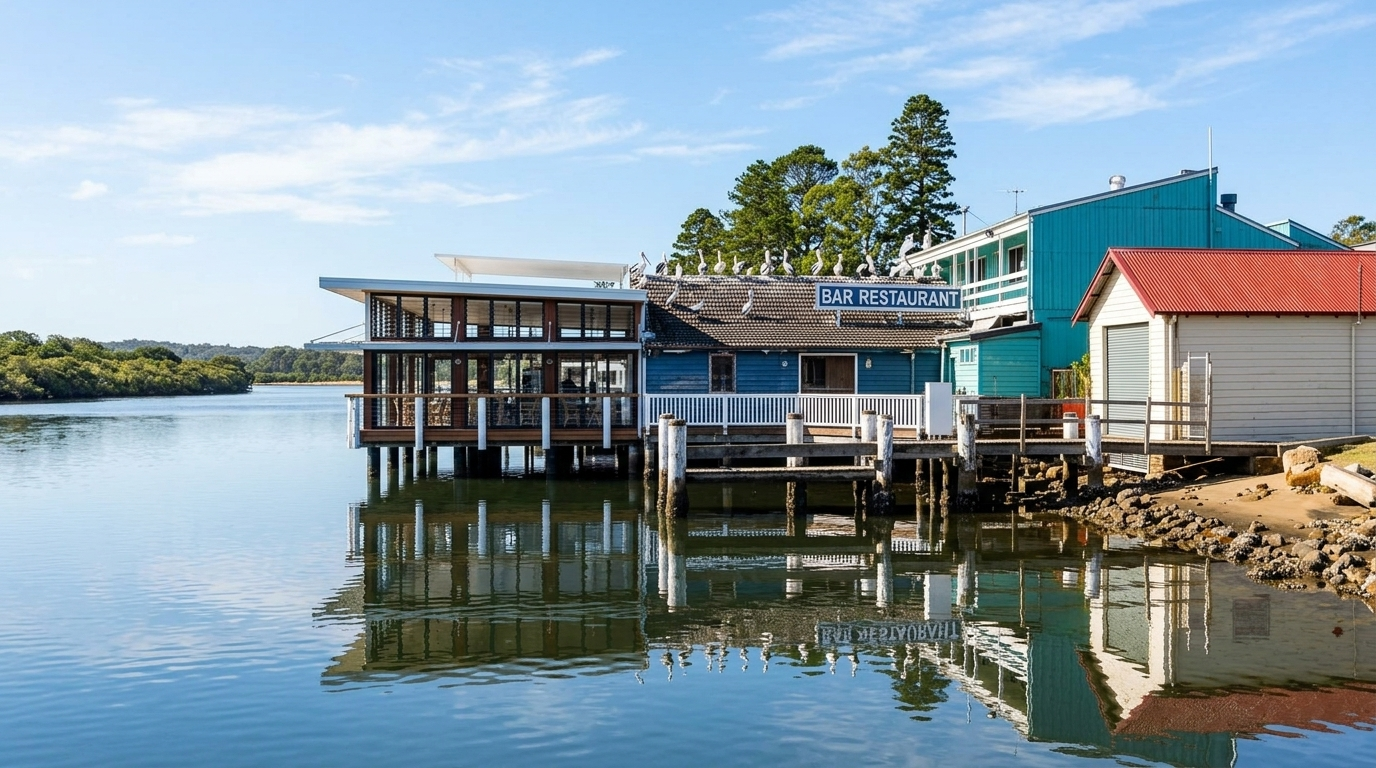
Woy Woy sits about 80 kilometres north of the Sydney CBD on the Central Coast, on a peninsula surrounded by Brisbane Water. It is on the main Northern rail line, so the trip to Central takes about 1 hour 16 minutes. The town had about 11,072 residents at the 2021 census.
For an investor, the rent or buy question takes a different shape. You are not choosing a place to live. You are weighing the suburb’s rental income against its capital growth, and deciding which one should do more of the work for your money.
Both sides of that equation are currently strong. Rents are climbing, vacancy sits below 1%, and prices keep growing. The decision usually comes down to your goal and your property type, not to whether Woy Woy is worth a look in the first place.
The buying case: equity and capital growth
Buying in Woy Woy puts you into a commuter-driven, waterfront market with clear historical data. OpenAgent puts the median house price at about $1.15 million, units at about $850,000, and the median dwelling across the suburb at roughly $1 million.
The growth numbers are consistent. Houses have added about 8.5% over the past 12 months, while units climbed 18.6% to 19.4% in the same stretch. Your Investment Property Magazine records annual capital growth for houses at close to 14.9%, and InvestorKit shows Central Coast houses have gained more than 130% over the past decade.
SFP Financial projects 4% to 6% annual growth through 2027, which would lift the Woy Woy median from about $950,000 in 2024 to somewhere between $1.10 million and $1.15 million.
Sydney-to-Coast migration keeps feeding buyers up the rail line, downsizers are drawn to the flat, walkable peninsula, and demand is still running ahead of the homes coming to market. Houses also move quickly: 44 sold in the most recent three months at a median 33 days on market. Waterfront homes carry a real premium, with recent sales along Brick Wharf Road including a $1.75 million result at number 158 in May 2026.
The renting case: income, vacancy and tenant demand
On the income side, Woy Woy’s rental market rewards patient landlords. OpenAgent puts median weekly rent at about $630 for houses and $520 for units, while mid-2025 figures from realestate.com.au sat higher, at around $650 for houses and $590 for units.
Yields vary by property type. realestateinvestar.com.au records houses at about 3.0% to 3.55%, townhouses near 4.0%, and units around 3.7%. Those numbers sit on top of a tight vacancy picture: vacancy runs about 0.83% locally and below 0.5% across the wider Gosford sub-region.
Tenants are competing for limited stock, and that shows up in rent growth. House rents have climbed about 5% and unit rents about 4.4% over 12 months, with Peninsula rents up around 10% in a year. The tenant base is broad and durable, made up of Sydney commuters, downsizers and retirees, and families drawn to the water. With 39.9% of dwellings rented, there is already a deep, established pool of renters in place.
Side by side: income vs equity
Put the two returns next to each other and the real choice appears. Rent gives you immediate cash flow that you can reinvest and compound. Buying gives you equity, plus capital growth on top.
For long-run context, the 2021 census recorded a median weekly rent of about $380 and a median monthly mortgage repayment of about $1,900. Today’s market rents have risen well above that baseline, which changes the arithmetic in a landlord’s favour.
A practical rule of thumb is to target a holding where the rent covers a meaningful share of your holding costs, so the property pays its way while growth compounds in the background. In Woy Woy that plays out as a yield-versus-growth trade-off: townhouses and units deliver more income today, while houses and their land deliver stronger growth over time.
What to buy: houses, townhouses or units?
The property type you choose sets the balance between income and growth.
Houses make up 57.4% of dwellings, with a median around $1.15 million and yields of about 3.0% to 3.55%. They carry the strongest long-term land story, which suits growth-focused investors.
Townhouses and villas account for 26.9% of the suburb, mostly single-storey, with a median listing around $710,000 and yields near 4.0%. They are the standout cash-flow play, and their single-level layout lines up with downsizer demand. That demand is more than a theory here: 41% of Woy Woy households are couples without children, so a ready audience for low-maintenance, single-level homes is already in place.
Units are a smaller 6.8% of stock, with a median around $850,000 and a yield near 3.7%. They have delivered the fastest recent growth at about 19% over 12 months.
Woy Woy’s houses-and-villas character suits its tenant profile, and the unit sector is attracting more attention as buyers look at the suburb.
Timing, outlook and how to decide
Vacancy sits below 0.5% across the Gosford sub-region, rents are rising, and the 4% to 6% forecast growth suggests values keep climbing. Rate cuts should also improve borrowing power and buyer demand, while upgrades to Woy Woy Road and proposed train-line improvements add to connectivity.
Woy Woy has been added to the NSW transport-oriented development program around the station, which points to more homes, more amenity, and a busier town centre over the years ahead.
The decision framework is simple. If you want income now, lean toward townhouses and units, where yields are highest. If you want equity later, lean toward houses and land, where the long-term growth story is strongest.
Either way, transport, the waterfront, sub-1% rental vacancy, and steady forecast growth all support the investor case in Woy Woy.
Conclusion
Woy Woy offers investors both a strong rental income market and a strong growth market. The rent or buy question here really means income now or equity later, and the suburb lets you choose which one leads.
Commuter rail, the waterfront, and the cafés and dining scene around The Boulevarde all support the appeal. Day to day, the suburb offers fish and chips at Woy Woy Fishermen’s Wharf, playgrounds and water views at Lions Park and Pelican Park, the Foreshore Walk along Brisbane Water, and golf at Everglades Country Club. With steady forecast growth on top, both the income and the equity case are backed by the local lifestyle. Whether you are chasing cash flow or capital growth, the current listings in Woy Woy are worth a look.
Frequently Asked Questions
Is Woy Woy a good place to buy an investment property?
Yes, on current numbers. Woy Woy offers commuter rail into Sydney, a waterfront lifestyle, house growth of about 8.5% and unit growth near 19% over the past year, vacancy below 1%, and a 4% to 6% forecast growth rate through 2027.
What rental yield can I expect in Woy Woy?
Yields vary by type. Houses return roughly 3.0% to 3.55%, units about 3.7%, and townhouses around 4.0%, which makes townhouses the lead performer on yield.
What are the current rents in Woy Woy?
Median weekly rent sits around $630 for houses and $520 for units, with mid-2025 figures closer to $650 and $590. Rents have risen about 5% for houses and 4.4% for units over the past 12 months.
Is the Woy Woy rental market strong right now?
It is. Vacancy runs about 0.83% locally and below 0.5% across the Gosford sub-region, rents are climbing, and demand comes from commuters, downsizers and families, which keeps the tenant pool broad and steady.
Should I buy a house, townhouse or unit in Woy Woy as an investor?
Match the type to your goal. Houses offer the strongest land and growth story, townhouses deliver the best yield, and units have posted the fastest recent growth.
How much do houses and units cost in Woy Woy?
Median houses are around $1.15 million and units about $850,000, with the median dwelling across the suburb near $1 million. Waterfront homes command a premium on top of those medians.
Is it better to rent or buy in Woy Woy right now?
That depends on your goal and horizon. Investors who want cash flow now lean toward the rental income side, which delivers immediate, compounding returns. Investors with a longer horizon lean toward buying for equity and capital growth.
What drives property growth in Woy Woy?
Sydney-to-Coast migration, the roughly 1 hour 16 minute train commute to Central, downsizer appeal, tight rental stock, and steady demand all push values higher. Those forces sit behind the 4% to 6% annual growth forecast through 2027.
What is Woy Woy’s vacancy rate, and why does it matter for investors?
Vacancy is about 0.83% locally and below 0.5% across the Gosford sub-region. For an investor, a sub-1% vacancy rate means limited rental stock, faster letting, and steady upward pressure on rents, which is a strong income signal.
Are units a good investment in Woy Woy?
They are worth a close look. Units have grown about 19% over the past 12 months, the fastest in the suburb, and they yield around 3.7%. Their commuter and downsizer appeal keeps demand steady.
What is the long-term outlook for Woy Woy property?
Central Coast houses have gained more than 130% over the past decade, and Woy Woy is forecast to reach roughly $1.10 million to $1.15 million by 2027 at 4% to 6% annual growth.
Who typically rents in Woy Woy?
The typical tenant pool includes Sydney commuters, downsizers and retirees, and families drawn to the waterfront. That broad base underpins the suburb, where about 40% of dwellings are rented.