
Negative gearing is simply what happens when a rental property’s deductible costs run higher than the rent it collects, and that shortfall lowers your taxable income for the year. The ATO describes it in one line: a property is negatively geared when your deductible expenses are more than the income you earn from it.
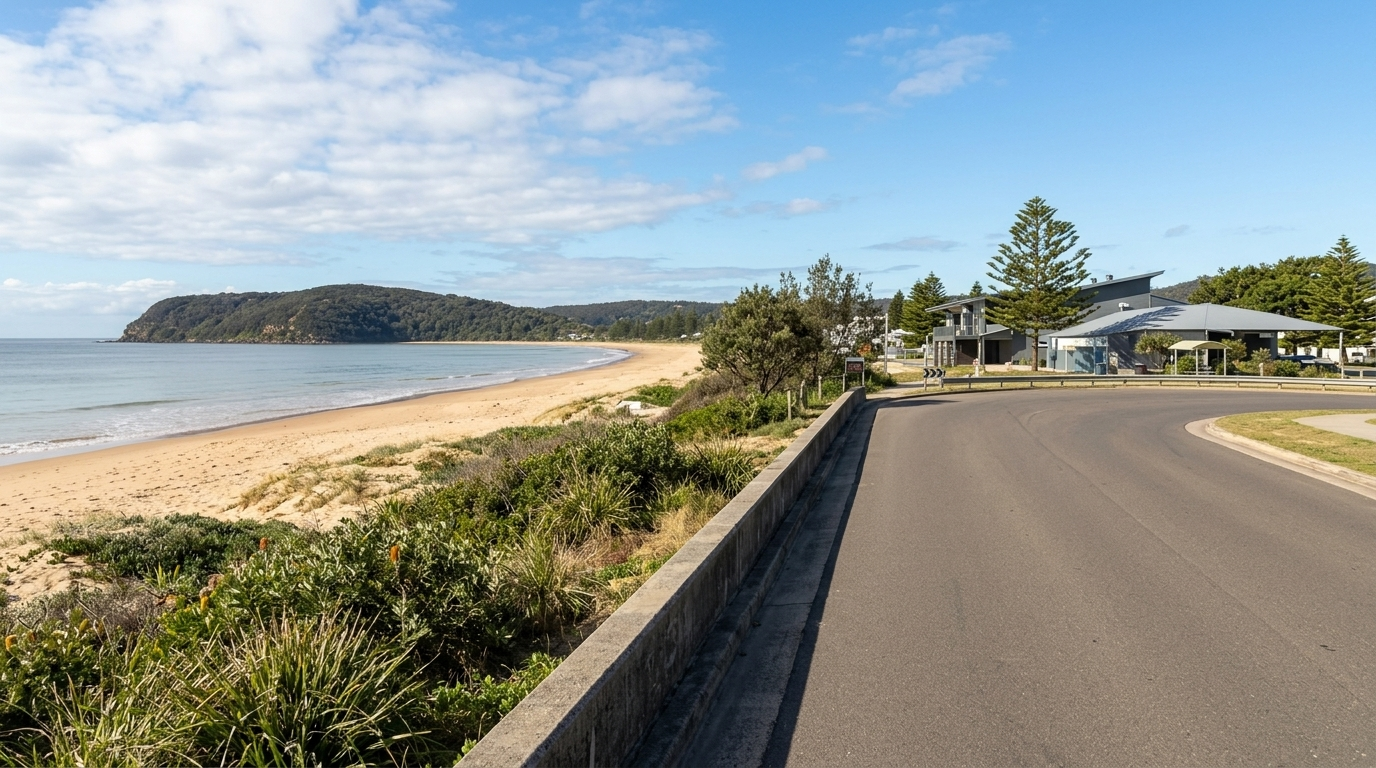
Umina Beach is an easy place to make sense of the idea. It is a beachside suburb on the Woy Woy Peninsula on the Central Coast, with vacancy sitting around 1.07%, rents trending up, and a steady queue of tenants across long-term leases and holiday lettings. Real Estate Investar tracks the suburb’s rental market. If you have been wondering whether a geared rental property stacks up locally, this guide runs through the fundamentals and applies them to the market you are actually buying into.
How negative gearing actually works
Gearing just means borrowing to invest. You buy a property with a loan, the rent covers some of the running costs, and the rest comes out of your pocket. “Negative” is the label for when those running costs, mostly loan interest, exceed the rent. There are three positions on the spectrum.
A property is negatively geared when its deductible costs are higher than its rent. It is neutrally geared when the two roughly balance. It is positively geared when the rent covers everything and leaves money over. It is common for geared properties in Australia to start on the negative side of the ledger in year one, simply because interest is the biggest single cost.
It helps to remember that a large slice of the “loss” is often a paper loss. As the Property Investment Professionals note, a property that is cashflow neutral before tax can still show a tax loss once depreciation is added. That matters because it changes how you read the numbers each year.
What you can claim on a rental property
The deductible side of the equation is made up of the everyday expenses of running a rental. Loan interest is the headline item. On top of that sit council rates, insurance, property management fees, maintenance and repairs, and the cost of advertising for tenants. The ATO’s rental expenses guide lists each of these, and the Rental properties guide sets out the detail for the year.
Then there is depreciation, and this is often the item that makes the biggest difference to the numbers. Depreciation is a non-cash deduction. You do not hand money over for it, but it still lowers your taxable income. It covers the gradual wear on the building itself and on the fixtures and fittings inside it. A quantity surveyor prepares a depreciation schedule that unlocks this, and the benefit is largest for newer builds, where there is more recent construction value to write down.
A worked example using Umina Beach numbers
Here is an illustrative example sized to the local market, with rounded figures rather than a quote. Take a median-priced Umina Beach house at about $1.25 million rented at about $650 a week.
The rent works out to roughly $33,800 a year. If the owner borrows 80% of the purchase price, that is a $1 million loan, and at around 6% the annual interest bill is about $60,000. Add rates, insurance, management and a maintenance allowance of roughly $8,000, and total deductions come to about $68,000 against $33,800 of income. That leaves a rental shortfall of around $34,200 for the year, before any depreciation is added.
That shortfall reduces the owner’s taxable income, and depreciation typically widens the deduction further without any extra cash leaving the bank account. The example is for illustration only, so run your own numbers and treat nothing here as financial advice.
Where the long-term benefit comes from
Negative gearing is rarely a one-year story. It is a strategy paired with the expectation that the property grows in value, so the yearly tax offset is one part and the eventual sale price is the other. When you sell, the capital gains tax discount lets investors pay tax on only half the gain, provided the asset has been held for more than 12 months, under the rules that apply to grandfathered properties and eligible new builds. That discount has shaped property investing since it was introduced.
Umina Beach has delivered the growth half of the equation. Central Coast house values are up about 45.1% over five years, and Umina Beach has performed strongly within that wider regional trend. OpenAgent records house growth of around 9.6% over the past 12 months, and OnTheHouse tracks a five-year rise in median value of about 21.6% for houses and 26.3% for units. That is the context that makes a modest annual shortfall worth weighing up in the first place.
The 2026 rules for Umina Beach investors
The May 2026 Federal Budget changed the rules for new purchases, so it is worth checking where you stand. For established residential properties purchased after 7:30pm on 12 May 2026, negative gearing losses can no longer offset salary and wages from 1 July 2027. Instead those losses offset residential rental income or future capital gains, with any unused amount carried forward. William Buck’s budget analysis has the detail.
The reassuring part for most existing investors is the grandfathering. If you already owned a property, or were under contract before the cutoff, you keep the current rules. Eligible new builds also remain fully inside the existing system, retaining both negative gearing and the CGT discount. The Budget factsheet spells out both exemptions.
Why Umina Beach suits a geared investment
A geared property only works when it stays tenanted and keeps growing, and Umina Beach scores well on both. About a third of occupied dwellings are rented, at 32.9% in the 2021 Census, while vacancy sits near 1.07% and median house yields sit around 2.58%, with townhouses closer to 3.5%.
Rents are heading up. Houses rent for about $650 a week, and units sit around $550 a week. Holiday demand across the Ettalong to Umina peninsula adds a second income stream for well-positioned short-stay properties, and the 693 unoccupied private dwellings recorded at the 2021 Census are consistent with a genuine holiday and second-home presence.
The amenity base supports rental demand. Woolworths, Coles, Aldi and Bunnings anchor the shopping, the Peninsula Recreation Precinct is the biggest playground on the Central Coast, two surf clubs patrol the beach, and the Woy Woy rail link keeps the Sydney commute within reach.
Practical next steps for local investors
If negative gearing looks like a fit, a few steps get you moving. Order a depreciation schedule, especially if you are buying a newer home, because that is where the non-cash deduction is largest. Keep records of every claimable expense from day one. And talk to a qualified accountant or adviser about how the 2026 rules apply to your specific position before you commit.
For the market side of the decision, speak to the local team at Stone Real Estate about current Umina Beach listings, rents and recent comparable sales. This article is general information only and does not take the place of financial, tax or investment advice.
Frequently Asked Questions
What does negative gearing mean for umina-beach investors?
It means the deductible costs of your rental property exceed the rent it earns, and the shortfall reduces your taxable income. It is the opposite of positive gearing, where rent covers everything and leaves a surplus, with neutral gearing sitting in the middle.
How does negative gearing reduce my tax on a umina-beach property?
The net rental loss is deducted from your other assessable income, such as salary, which lowers the tax you pay for that year. Under the 2026 changes, that salary offset continues to apply to grandfathered properties and eligible new builds, while established properties bought after 12 May 2026 follow the new rules from 1 July 2027.
What expenses can I claim on a umina-beach rental property?
Loan interest, council rates, insurance, property management fees, maintenance and repairs, advertising for tenants, and depreciation are the main items. Depreciation covers both capital works on the building and plant and equipment inside it.
What is depreciation on a umina-beach investment property?
Depreciation is a non-cash deduction for the gradual wear on the building and its fixtures. A quantity surveyor’s schedule calculates it for you, and the benefit is largest for newer builds, where there is more recent construction value to write down.
Is negative gearing still available in umina-beach in 2026?
Yes, for most investors. Owners who held property, or were under contract, before 12 May 2026 keep the current rules, and eligible new builds remain fully entitled to negative gearing. Established properties purchased after the cutoff follow the new rules from 1 July 2027.
What counts as a new build for the umina-beach negative gearing exemption?
It means a genuinely new dwelling that adds to housing supply. A knockdown-rebuild generally does not qualify unless the site is subdivided to add residences.
Does negative gearing work as a strategy in umina-beach?
The conditions line up. Umina Beach has low vacancy near 1.07%, about a third of occupied dwellings rented, rising rents, and strong holiday-let demand.
What rental return can I expect in umina-beach?
Houses rent for about $650 a week and units around $550 a week. Median yields run about 2.58% for houses and roughly 3.5% for townhouses, with well-positioned holiday lettings often doing better.
How has umina-beach performed for capital growth?
Central Coast house values have risen about 45.1% over five years, and Umina Beach has performed strongly within that wider trend. Houses in the suburb are up around 9% to 10% over the past 12 months, with five-year median-value growth of roughly 21.6% for houses and 26.3% for units. The median house price sits around $1.25 million.
Do I need an accountant to use negative gearing in umina-beach?
It is not mandatory, but professional tax advice is worth getting, because individual circumstances and the 2026 rule changes affect the outcome. A local property expert can supply the market data an adviser will want.