
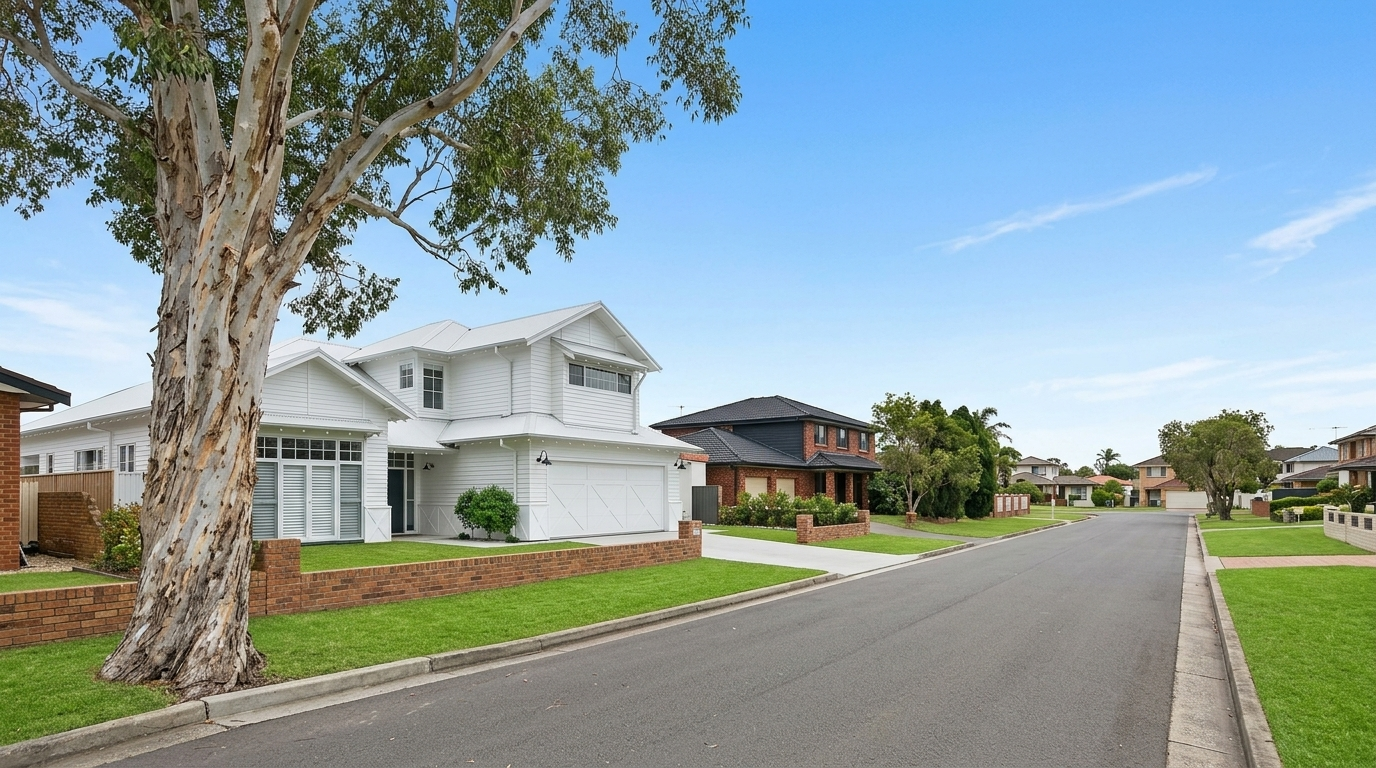
A St Huberts Island purchase is really a purchase of water frontage. The homes that line Mercator Parade and Marina View Parade sit on the island’s internal canals, each with a private pontoon and direct access to Brisbane Water. It is the Central Coast’s premium waterfront market. The median house price sits around $1.95 million, and recent canal-front sales have ranged from $3.2 million at 9 Mercator Parade to $3.4 million at 13 Mercator Parade in late 2025.
On a high-value, tightly held asset like that, the gap between an average return and a strong one rarely comes down to rent alone. It comes down to tax strategy. The step that most St Huberts Island investors overlook is ordering a depreciation schedule.
A depreciation schedule is a report prepared by a qualified quantity surveyor. It turns the natural wear and tear on a building and its fixtures into an annual tax deduction you can claim while the property is genuinely available for rent. For St Huberts Island buyers, where homes are regularly renovated or rebuilt and rents are healthy but yields are modest, it is one of the easiest ways to improve the after-tax position.
What a depreciation schedule actually is
A depreciation schedule is a detailed report that sets out how a building and the assets inside it decline in value over time, and the deductions an investor can claim each financial year as a result. It is prepared by a qualified quantity surveyor.
It is not something you piece together yourself, and it is not a job for your accountant. The ATO recognises quantity surveyors as the professionals appropriately qualified to estimate construction costs and prepare the asset schedule.
The report contains two streams. Capital works deductions cover the building’s structure and the items permanently fixed to it. Plant and equipment deductions cover the removable or mechanical items, such as ovens, air conditioning and carpets. Together they are laid out as a year by year projection of claimable amounts, so you can hand the document straight to your tax adviser.
The two deductions inside a schedule
Capital works deductions, also known as Division 43, cover the structure of the building and the things permanently fixed to it. For residential property where construction started after 15 September 1987, they are claimed at 2.5% per year over 40 years.
Plant and equipment deductions, Division 40, cover the removable and mechanical assets. Ovens, dishwashers, blinds, carpets, air conditioning. Each one is written off over its ATO-set effective life, so a dishwasher is claimed over 8 years.
For most established homes, capital works make up 85% to 90% of the total claim. That means a home without brand-new appliances usually still carries meaningful deductions, because the structure itself keeps depreciating. NAB’s worked example shows the effect: a property that cost $200,000 to build in 1990 still yields roughly $5,000 a year in capital works deductions through to 2030.
Why this matters on St Huberts Island specifically
On St Huberts Island, the value of what gets built drives the arithmetic. The median house sits around $1.95 million, and premium canal-front homes trade from $3 million up to the $6 million paid for 21 Long Arm Parade in October 2024. The construction-cost component of a rebuild or major renovation is large. And 2.5% of a large construction cost is a large annual deduction.
The island is also a genuine renovate-and-rebuild market. The original 1970s project homes sit alongside contemporary waterfront rebuilds with private pontoons. Every one of those renovations and rebuilds creates fresh capital works and new plant and equipment that can be depreciated from day one.
Then there is the yield. Gross rental yields on the island sit in a band of roughly 1.89% to 3.3%. Median weekly rent for houses is around $875. On a seven-figure asset, shaving several thousand dollars off taxable income each year meaningfully improves the after-tax position, and on a modest yield every deduction counts.
The rental market is tight. Vacancy sits around 0.74%, and waterfront homes are popular with short-term holiday renters. A property that is genuinely available for rent is exactly the condition that makes depreciation claimable.
Compound growth of around 6.8% a year over the past four years means an investor who holds for the long run has many years over which to bank those deductions.
Getting the most from a schedule
A schedule is prepared by a qualified quantity surveyor, not your accountant. The surveyor inspects the property, measures and values the construction and fixtures, and produces the year by year schedule. Your accountant then applies it in your return.
The cost is modest. A schedule typically runs around $500 to $900, and the fee is itself tax-deductible in the year you pay it. First-year deductions on established homes commonly reach $6,000 to $12,000 or more, and more again on new builds, so the report tends to pay for itself several times over.
Timing matters. The ideal moment to order a schedule is around settlement, so the first full financial year of deductions is captured. Deductions are pro-rated for the portion of the year the property is genuinely available for rent.
Keep the schedule and a simple asset record for the life of the claim. The ATO recommends keeping records of your depreciating assets, and a quantity surveyor can prepare the schedule at the time the property is purchased.
Clearing up the misconceptions
“It’s an old home, so there’s nothing to claim.” Not necessarily. Renovated or updated homes, and newly installed fixtures, still generate deductions even when the original build is decades old.
“Depreciation is only for new off-the-plan.” Capital works deductions apply broadly to income-producing residential property built after September 1987, and new plant and equipment is claimable regardless of the home’s age.
“It’s not worth it on a holiday rental.” A St Huberts Island waterfront home that is genuinely available for rent, including short-stay holiday use, can still generate depreciation deductions for the periods it is earning income.
“The schedule is complicated.” It is not. The quantity surveyor does the work, and the investor simply hands the report to their tax adviser each year.
Conclusion
On a premium canal-estate asset like St Huberts Island, a depreciation schedule turns the building’s natural decline in value into a recurring tax deduction. That improves after-tax cash flow in a market where capital values are strong and rents are healthy.
Waterfront living, a tight rental market and long-term growth all support a long hold, and the annual deductions accumulate over that time.
If you are weighing up a St Huberts Island investment, talk to the team at Stone Real Estate. They can walk you through current opportunities and show you how a depreciation schedule fits into your purchase plan.
Frequently Asked Questions
What is a tax depreciation schedule for a st-huberts-island investment property?
It is a report prepared by a qualified quantity surveyor that itemises capital works and plant and equipment deductions year by year, so you know exactly what to claim each financial year.
What can I claim depreciation on in st-huberts-island?
Two things: the building structure (capital works, Division 43) and the removable or mechanical fixtures and appliances such as ovens, dishwashers, blinds and air conditioning (plant and equipment, Division 40).
Is a depreciation schedule worth it for an older st-huberts-island home?
Often yes. Renovated and updated homes, and newly installed fixtures, still generate deductions even when the original build is decades old.
What is the difference between capital works and plant and equipment depreciation in st-huberts-island?
Capital works are claimed at 2.5% a year over 40 years for the structure, while plant and equipment are written off over each asset’s ATO-set effective life. Capital works usually dominate the total claim.
Can I claim depreciation on a renovated or rebuilt st-huberts-island property?
Yes. Renovations and rebuilds create new capital works and new plant and equipment, both of which are fully depreciable from the time they are complete.
How much can I expect to claim in the first year on a st-huberts-island rental?
Established homes commonly produce $6,000 to $12,000 or more in first-year deductions, with new builds typically higher again.
How much does a depreciation schedule cost in st-huberts-island, and is the fee tax-deductible?
A schedule typically costs around $500 to $900, and the fee is deductible in the year you pay it.
Do I need a depreciation schedule for a st-huberts-island holiday rental?
Yes, if the home is genuinely available for rent, including short-stay holiday use. You can claim deductions for the periods the property is earning income.
When should I order a depreciation schedule for a st-huberts-island property?
Around settlement, so the first full financial year of deductions is captured. Deductions are pro-rated for the part of the year the property is available for rent.
Can I claim depreciation on a st-huberts-island home I used to live in and now rent out?
Yes. Deductions begin once the property becomes genuinely available for rent, and a quantity surveyor can prepare a schedule at that point.
Does claiming depreciation on a st-huberts-island property affect capital gains tax when I sell?
Capital works deductions adjust the cost base when you eventually sell, while plant and equipment is handled separately. Your tax adviser can factor this into your long-term hold planning.
Who prepares a depreciation schedule for a st-huberts-island property, and why isn’t it just my accountant?
A qualified quantity surveyor prepares it. They are the ATO-recognised specialists for estimating construction costs, and your accountant then applies the schedule in your return.