
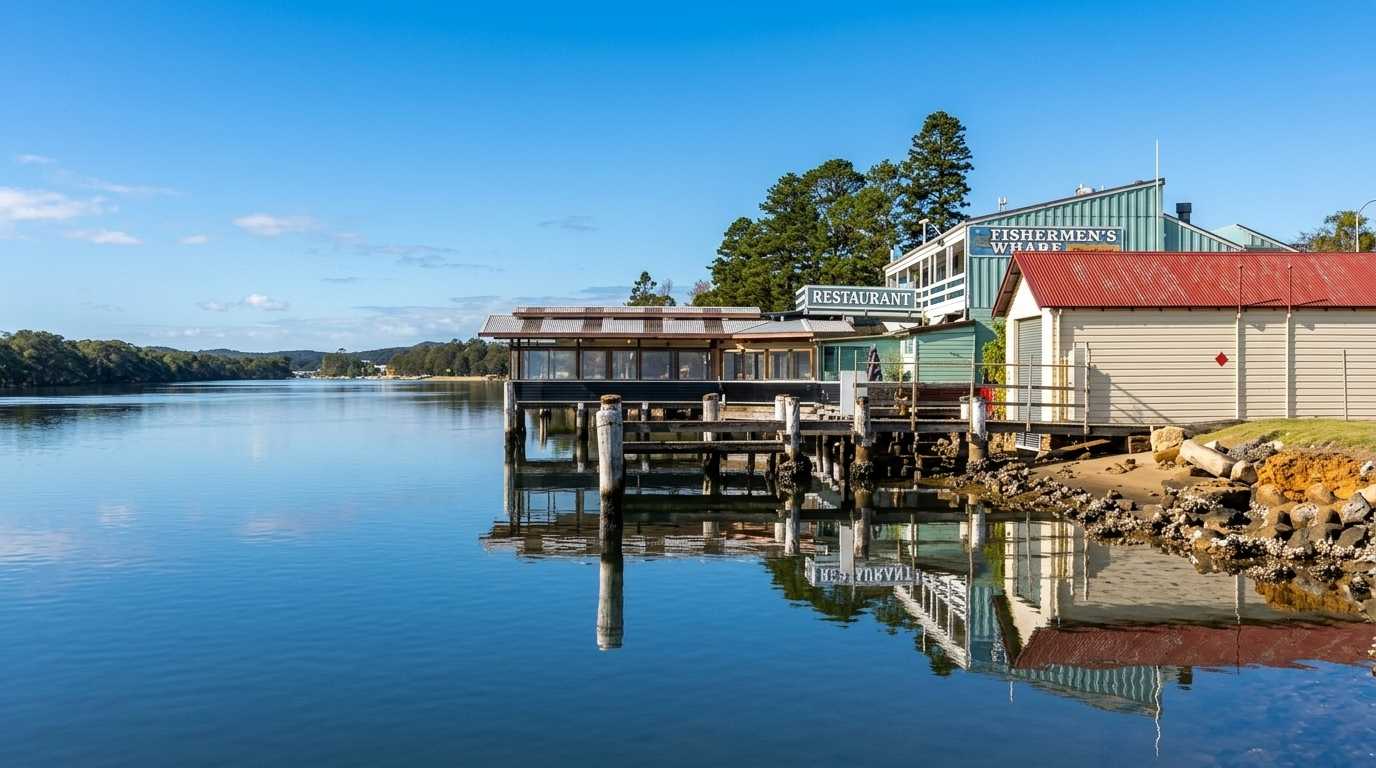
Woy Woy is a waterfront commuter suburb on the Central Coast with tight rental demand and steady price growth. This guide sets out the practical steps a first-time investor can take to buy there.
Introduction: Why Woy Woy belongs on your first-investment shortlist
Woy Woy sits about 80 kilometres north of Sydney on its own peninsula, wrapped by Brisbane Water and Brisbane Water National Park, with a direct rail link into the city that takes about an hour and sixteen minutes.
The suburb has grown well beyond its holiday-town roots. The waterfront around Fishermen’s Wharf and The Boulevarde is now a food and lifestyle strip, with the town centre a short walk from the station. The fundamentals are clear: a vacancy rate under one per cent, rising rents, and steady price growth. This checklist walks you through the four things that matter most: property types, rental demand, goals and budget, and the people who help you buy well.
Know your Woy Woy property types
Get clear on what you can actually buy first. The 2021 Census shows three distinct choices: separate houses make up about 57 per cent of dwellings, villas and townhouses about 27 per cent, and apartments around seven per cent.
Freestanding houses carry the highest price tags, with a median house price around $1.15 million. Entry-level homes change hands in a broad band from the high $900,000s to roughly $1.3 million, per NSW Valuer General sales records. That means a first-time buyer can find a start without reaching for the top of the suburb. Houses are where most investors chase long-term growth, and Woy Woy’s waterfront pockets support that strategy.
Villas and townhouses are the affordable option. Many are single storey, popular with downsizers, and the median listing price sits around $710,000. That lower entry point, combined with the suburb’s strongest yields, is why many first-timers start here.
Units are a smaller slice, mostly clustered near the station and town centre. The median unit price is about $850,000, and their walk-to-the-train location makes them an easy rental for commuters.
Understand the rental demand behind the suburb
Rental demand in Woy Woy is strong. Roughly 40 per cent of households rent, and the vacancy rate is about 0.83 per cent, well under the NSW figure of 1.02 per cent: a very tight market.
Three groups underpin that demand. First, Sydney commuters on a direct train of about an hour and sixteen minutes with frequent peak services on the Transport NSW network. Second, downsizers and retirees, who value the flat, walkable streets and waterfront setting; the median age here is 48 and about 41 per cent of households are couples without children. Third, the local workforce behind the town centre’s shops, cafes, and services.
Median weekly rent is about $630 for houses and $520 for units, and both have grown over the past year, up around five per cent for houses and 4.4 per cent for units.
Set your investment goals
Before you borrow a dollar, decide what “good” looks like. Most first-time investors choose between two priorities: cash flow now, or capital growth later. Woy Woy can serve either, but the property type should match the goal you write down.
For stronger rental income from day one, lean toward townhouses, where yields run around 4.02 per cent, compared with roughly 3.0 to 3.55 per cent for houses and about 3.7 per cent for units. For growth, houses and waterfront pockets are where the capital has been building: OpenAgent records unit values up about 18.6 per cent over the past twelve months, and Your Investment Property reports annual capital growth for houses around 14.89 per cent. A forecast for 2025 to 2027 points to steady growth of about four to six per cent a year.
Match your time horizon and entry budget to the type you choose: a townhouse around $710,000 needs a smaller deposit than a median house around $1.15 million, so a cash-flow goal can start sooner, while a ten-year horizon suits house-led growth. Write down two or three concrete goals before you shop to keep focused.
Budget and get finance-ready
The buyers who move fastest have already done the numbers. Start with a deposit and a realistic sense of your borrowing capacity, then get pre-approval. It matters here because homes sell quickly: houses spend about 33 days on market and units about 29. A pre-approved buyer can act when the right place appears.
A licensed mortgage broker who knows Central Coast pricing can help. They can show what you can borrow against a house, unit, or townhouse here, and structure the loan to suit your goals. If the home will be your first and you plan to live in it, check your eligibility for NSW first-home buyer assistance: a full stamp-duty exemption applies to homes up to $800,000, with a sliding concession through to $1 million.
Choose the right people to help you buy well
Buying well is a team effort. Start with a local agent who knows Woy Woy’s streets and pockets. The suburb has real variation: waterfront positions around The Boulevarde and Brick Wharf Road command a premium, while standard 400 to 600 square metre blocks in the quieter house streets offer a more affordable entry point and a calmer setting. Street-level knowledge is how you tell those apart, and that is where Stone Real Estate comes in. Their team knows the pockets and can shortlist properties that fit your goals.
Around that agent, build the rest of your team. A licensed mortgage broker keeps your finance moving. A property manager gets your rental running from day one. An accountant or tax adviser helps with ownership structure, depreciation, and expenses.
Your first-time investor checklist
Here is the whole article condensed into a keep-it list. Work through it in order.
- Learn the property types: houses for growth, townhouses for yield and a lower entry point, units near the station for tenant appeal.
- Confirm the rental demand: a vacancy rate below one per cent, about 40 per cent of households renting, and rising rents.
- Set two or three goals in writing, with a time horizon and an entry budget, before you look at a single listing.
- Sort your budget and get pre-approval so you can move quickly in a market where homes sell in about a month.
- Assemble your team: a local agent, a mortgage broker, a property manager, and an accountant.
- Shortlist properties that match your goals and buy with confidence.
A clear plan beats guesswork.
Conclusion: Buying well in Woy Woy
For a first-time investor, Woy Woy offers strong fundamentals: a vacancy rate below one per cent, rising rents, recent annual capital growth around 14.89 per cent, and a tenant base of commuters and downsizers.
The next step is a small one. Book a conversation with Stone Real Estate about the suburb’s pockets, and get pre-approval started so you are ready to act. Do those two things this week and the rest of the checklist starts to look manageable.
Frequently Asked Questions
Is Woy Woy a good place for a first-time investor?
Yes. Woy Woy combines a vacancy rate below one per cent, rising rents, and steady price growth with a tenant base of Sydney commuters and downsizers. Recent rental yields and growth figures point to a market with tight rental supply.
What property types can I buy in Woy Woy?
Three main types. Separate houses make up about 57 per cent of dwellings, villas and townhouses about 27 per cent, and apartments around seven per cent. Median prices run about $1.15 million for houses and $850,000 for units, with townhouses offering a lower entry point around $710,000.
What rental yield can I expect in Woy Woy?
Yields sit around 3.0 to 3.55 per cent for houses, roughly 4.02 per cent for townhouses, and about 3.7 per cent for units. Townhouses are the stand-out for cash flow, while houses lean toward long-term growth.
How strong is rental demand in Woy Woy?
Very strong. The vacancy rate is about 0.83 per cent, below the NSW average of 1.02 per cent, and around 40 per cent of households rent.
What is the median house price in Woy Woy compared to units?
The median house price is about $1.15 million and the median unit price is about $850,000. Townhouses offer a more affordable route, with a median listing price around $710,000.
Should I buy a house, townhouse, or unit in Woy Woy as my first investment?
It depends on your goal. Choose a house for capital growth, a townhouse for stronger yield at a lower entry price, or a unit near the station for an easy walk-to-the-train rental.
How much do I need to save to invest in Woy Woy?
It depends on the property type and your borrowing capacity. A median unit is about $850,000 and a median house about $1.15 million, so your deposit will scale with your target. Get pre-approval and talk to a licensed broker to turn those numbers into a budget. If the home will be your first and you plan to live in it, you may also qualify for NSW stamp-duty assistance on homes up to $1 million.
How far is Woy Woy from Sydney and why does it matter for renters?
Woy Woy is about 80 kilometres north of Sydney with a direct train of about an hour and sixteen minutes and frequent peak services. That commute keeps the tenant pool full of Sydney workers.
What is the growth outlook for Woy Woy?
Positive. OpenAgent records house values up about 8.5 per cent and unit values up about 18.6 per cent over the past twelve months, while Your Investment Property reports annual capital growth for houses around 14.89 per cent. A forecast to 2027 points to steady annual growth of about four to six per cent.
Who should be on my Woy Woy buying team?
A local agent like Stone Real Estate, a licensed mortgage broker, a property manager, and an accountant or tax adviser.
Is Woy Woy better for cash flow or capital growth?
It can serve both, which is why your goals come first. Townhouses lean cash flow with yields around 4.02 per cent, while houses and waterfront pockets lean growth.
What should I do first to invest in Woy Woy?
Start with the property types and the rental market, write down two or three goals, and get pre-approval underway. Then book a conversation with a local agent like Stone Real Estate to shortlist properties that fit.